
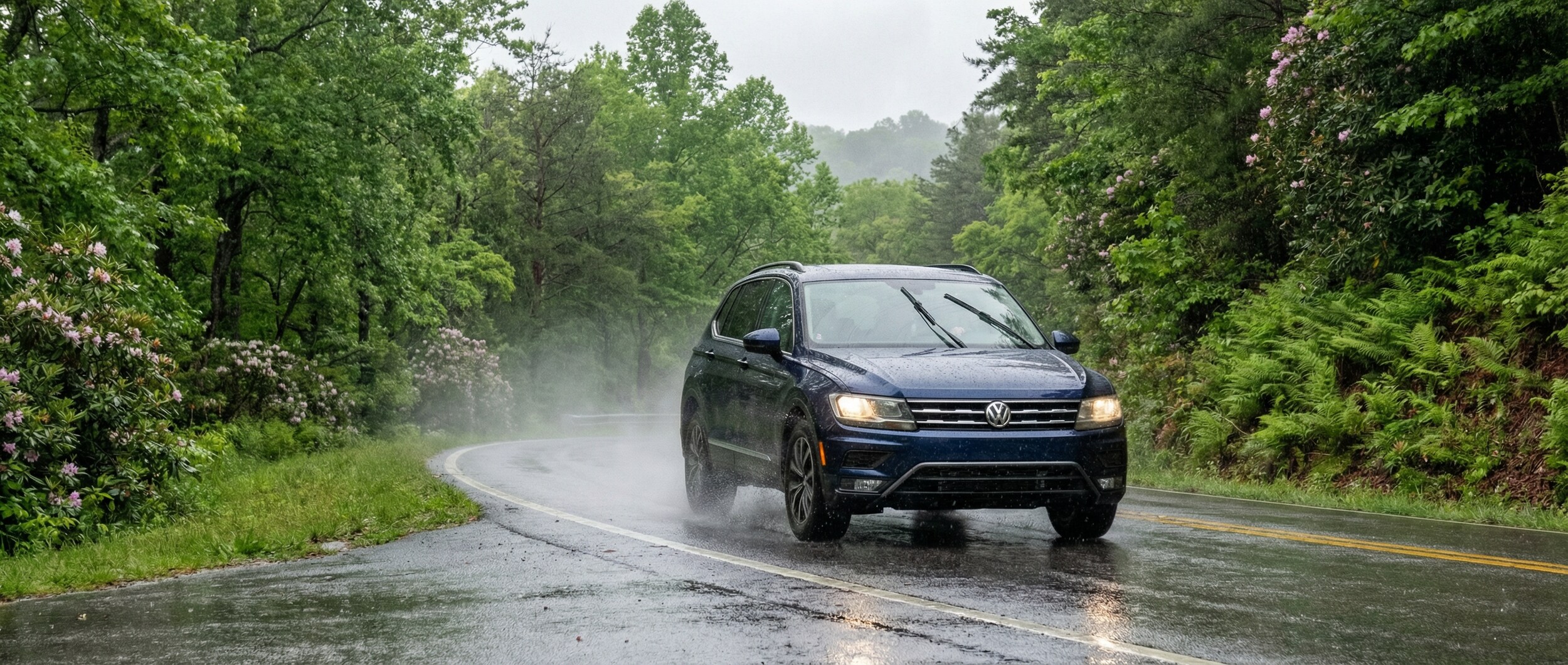
April showers in Greenville, SC bring more than just May flowers - they create hazardous driving conditions that catch many drivers off guard. Your Volkswagen® Tiguan's advanced safety systems provide excellent wet weather protection, but understanding hydroplaning prevention remains crucial for navigating the frequent downpours that sweep through the Upstate from March through June.
Understanding Hydroplaning Risk on Greenville's Roads
Hydroplaning occurs when water builds between your tires and the road surface, causing a complete loss of traction - and it happens more frequently than most drivers realize. On Interstate 85 near Pelham Road or along Woodruff Road after a sudden downpour, vehicles can start hydroplaning at speeds as low as 35 mph when water depth reaches just 1/10th of an inch.
The Tiguan's Electronic Stability Control (ESC) and Anti-lock Braking System (ABS) work together to help maintain control during these critical moments. These systems monitor your vehicle's movement 25 times per second, automatically adjusting brake pressure and engine power to individual wheels when they detect loss of traction.
Did you know? Your Tiguan's rain-sensing wipers activate automatically when they detect moisture, but the system also communicates with the vehicle's traction control to prepare for potentially slippery conditions.
Greenville's unique topography creates additional challenges. The rapid elevation changes between downtown and areas like Travelers Rest mean water runs off quickly, creating deeper puddles in low-lying areas. During spring storms, underpasses along Wade Hampton Boulevard and Academy Street become particularly prone to standing water.
Critical Tire Maintenance for Wet Weather Safety
Your tires serve as the only connection between your Volkswagen and the road - just four contact patches, each about the size of your hand, keeping 4,000 pounds of vehicle under control. The Tiguan comes equipped with all-season tires designed to channel water away through specialized tread patterns, but their effectiveness depends entirely on proper maintenance.
| Tire Condition | Safe Wet Weather Speed | Hydroplaning Risk | Action Required |
|---|---|---|---|
| New (8-10/32") | Posted speed limits | Low | Regular rotation |
| Good (6/32") | Reduce by 5-10 mph | Moderate | Monitor wear |
| Fair (4/32") | Reduce by 15-20 mph | High | Plan replacement |
| Worn (2/32") | Reduce by 25+ mph | Severe | Replace immediately |
Tire pressure affects hydroplaning resistance just as much as tread depth. Underinflated tires can't maintain their designed shape, reducing their ability to push water aside. The Tiguan's Tire Pressure Monitoring System (TPMS) alerts you when pressure drops, but checking manually once a month ensures optimal performance.
Pro tip: Check tire pressure when tires are cold, before driving. Volkswagen recommends 33-35 PSI for most Tiguan models, but verify your specific requirement on the driver's door jamb sticker.
Rotation every 5,000-7,500 miles ensures even wear across all four tires. Uneven wear patterns create varying traction levels that increase hydroplaning risk, especially during Greenville's sudden afternoon thunderstorms. This makes it the perfect time to check out our new inventory for the latest Tiguan models with advanced safety features.
Speed and Distance Management in Spring Storms
The relationship between speed and hydroplaning follows a simple rule: faster speeds require less water depth to lose traction. Your Tiguan's advanced drivetrain provides excellent grip, but physics still applies when water creates a barrier between tire and asphalt.
Safe following distances become even more critical during spring rains. The three-second rule for dry conditions should expand to six seconds or more on wet roads. This gives you adequate time to respond if the vehicle ahead encounters standing water or needs to brake suddenly.
Consider these adjusted speeds for common Greenville driving scenarios:
- Interstate 385 through downtown: Reduce from 65 mph to 55 mph in moderate rain
- Laurens Road commercial district: Drop from 45 mph to 35 mph when puddles form
- Residential areas near Falls Park: Maintain 20 mph or less during heavy downpours
- Highway 25 toward Travelers Rest: Decrease by 10-15 mph when rain begins
The Tiguan's available 4MOTION® all-wheel drive system provides additional confidence by automatically transferring power to wheels with the most traction. However, even with AWD, reducing speed remains your most effective safety measure.
Advanced Tiguan Safety Features for Wet Weather
Modern Volkswagen engineering shines brightest when conditions deteriorate. The Tiguan incorporates multiple systems working in harmony to prevent loss of control, but understanding how they function helps you use them effectively.
Electronic Stability Control (ESC) serves as your invisible co-pilot, comparing your steering input with the vehicle's actual direction 25 times per second. When it detects a mismatch - such as during a hydroplaning event - it selectively applies brakes to individual wheels to help maintain your intended path. You might notice a pulsing sensation through the brake pedal when ESC activates.
Key Wet Weather Features:
- Rain-sensing wipers with speed-sensitive adjustment
- Automatic headlight activation in low visibility
- Hill Hold Assist to prevent rollback on wet inclines
- Electronic Differential Lock (EDL) for optimal traction
- Trailer Stability Assist for those towing in wet conditions
The available Area View camera system provides a bird's-eye view of your vehicle, particularly helpful when navigating flooded parking areas around Haywood Mall or checking for standing water at Main Street's numerous construction zones. Meanwhile, Lane Keeping System helps prevent unintended drift if you encounter water in just one lane.
While these features provide exceptional protection, they work best when you drive appropriately for conditions. Technology enhances safety but doesn't replace careful driving judgment.
Recovery Techniques When Hydroplaning Occurs
Despite all precautions, hydroplaning can still occur during Greenville's intense spring storms. Your response in those first critical seconds determines whether you regain control or lose it completely.
Immediate Response Protocol:
Step 1: Ease Off the Accelerator
Don't brake suddenly. Gradually reduce throttle input to allow the tires to slow naturally and regain contact with the road surface.
Step 2: Maintain Steering Position
Keep the steering wheel straight or pointed where you want to go. Avoid the instinct to make sudden corrections.
Step 3: Wait for Traction Return
You'll feel the tires "bite" again as they regain contact. This typically happens within 1-2 seconds.
Step 4: Gently Correct Direction
Once traction returns, make small steering adjustments to return to your lane.
Common mistakes include slamming on brakes (which locks tires and extends hydroplaning), overcorrecting with steering (causing fishtailing), and panicking instead of remaining calm. The Tiguan's stability systems help during recovery, but smooth, deliberate actions from the driver remain essential.
Practice these techniques mentally before you need them. Muscle memory developed through visualization can make the difference when seconds count. Whether you're navigating the curves of Highway 11 toward the Cherokee Foothills Scenic Highway or dealing with standing water on Pleasantburg Drive, preparation beats panic every time.
Seasonal Preparation and Local Resources
Greenville's spring weather patterns create predictable challenges for local drivers. March through June brings afternoon thunderstorms that can drop an inch of rain in 30 minutes, overwhelming storm drains and creating hazardous conditions throughout the Upstate.
Spring Vehicle Preparation Checklist:
Spring Vehicle Preparation Checklist:
- Inspect tire tread depth and pressure
- Test windshield wipers and replace if streaking
- Verify all lights function properly
- Check brake performance
- Ensure washer fluid reservoir is full
Local trouble spots during heavy rain include the Augusta Street underpass, the low areas along the Swamp Rabbit Trail crossings, and the intersection of Church Street and Academy Street downtown. Knowing these locations helps you plan alternate routes during severe weather.
Did you know? Greenville averages 47 inches of rain annually, with May typically being the wettest month at 4.5 inches - making spring preparation especially critical for Tiguan owners.
For those considering a vehicle upgrade, this is an ideal time to explore our pre-owned inventory for Tiguan models equipped with the latest safety technology. The peace of mind during storm season often justifies the investment.
Common Questions About Hydroplaning Prevention in Greenville, SC
How fast can you hydroplane in a Volkswagen Tiguan during Greenville's spring rains?
Hydroplaning can occur at speeds as low as 35 mph when water depth reaches 1/10th of an inch on Greenville roads. The Tiguan's Electronic Stability Control helps maintain control, but reducing speed by 10-15 mph during heavy rain significantly decreases risk. Conditions on I-85 and Woodruff Road are particularly hazardous during sudden downpours.
What tire tread depth does Volkswagen recommend for safe wet weather driving?
Volkswagen recommends replacing tires when tread depth reaches 4/32 of an inch for optimal wet weather performance. New Tiguan tires start at 10/32", providing maximum water displacement. The difference between 4/32" and 2/32" can double your stopping distance on wet Greenville streets during spring storms.
Does the Tiguan's 4MOTION all-wheel drive prevent hydroplaning in SC?
4MOTION AWD helps maintain traction by sending power to wheels with grip, but it cannot prevent hydroplaning entirely. When all four tires lose contact with the road surface simultaneously, even AWD cannot help. The system excels at maintaining control during recovery and provides added confidence on wet roads throughout the Upstate.
When should I schedule spring maintenance for my Volkswagen in Greenville?
Schedule spring maintenance in early March before Greenville's heavy rain season begins. This timing allows technicians to inspect tires, brakes, and wipers before you need them most. Annual spring service should include tire rotation, brake inspection, and windshield wiper replacement to ensure optimal performance during April and May storms.
Which Greenville, SC roads are most prone to hydroplaning conditions?
Wade Hampton Boulevard near the underpass, Academy Street's low-lying areas, and Pleasantburg Drive after sudden storms create the highest hydroplaning risk in Greenville. Interstate 385 between Haywood Road and Woodruff Road also accumulates standing water quickly. Local drivers know to reduce speed significantly in these areas during spring rains.
How do I check if my Tiguan's tires are safe for Greenville spring weather?
Use a penny to check tread depth - insert it with Lincoln's head down. If you see his entire head, replace your tires immediately. For Greenville's wet conditions, perform this test monthly and check tire pressure when cold. The Tiguan's TPMS monitors pressure, but manual checks ensure optimal safety during spring storm season.
Confident Driving Through Greenville's Spring Season
Mastering hydroplaning prevention transforms spring driving from stressful to manageable, especially with your Tiguan's advanced safety systems working in your favor. By maintaining proper tire condition, adjusting your speed for conditions, and understanding your vehicle's capabilities, you're prepared for whatever weather patterns sweep through the Upstate. Regular maintenance and mindful driving habits ensure you navigate Greenville's challenging spring weather with confidence. The team at Steve White Volkswagen understands these local challenges and stands ready to help keep your Tiguan performing safely through every season.
Categories:
Social