
The short version
- The myth says used German cars are too expensive and unreliable for a student budget. The reality is more specific than that, and more useful.
- The 2022 and newer Volkswagen Jetta switched to a 1.5-liter engine with a dramatically smaller NHTSA complaint footprint than the 2019-2021 1.4-liter cars. Engine year matters more than brand.
- The 2026 Jetta runs on regular 87-octane gasoline, so no premium required. The EPA rates it at up to 40 mpg highway.
- The 2023 Volkswagen Tiguan earned the IIHS Top Safety Pick+ designation, the agency's highest honor.
- A pre-purchase inspection at a Volkswagen-trained service center separates the smart used buys from the headaches. That step is the easy one to skip.
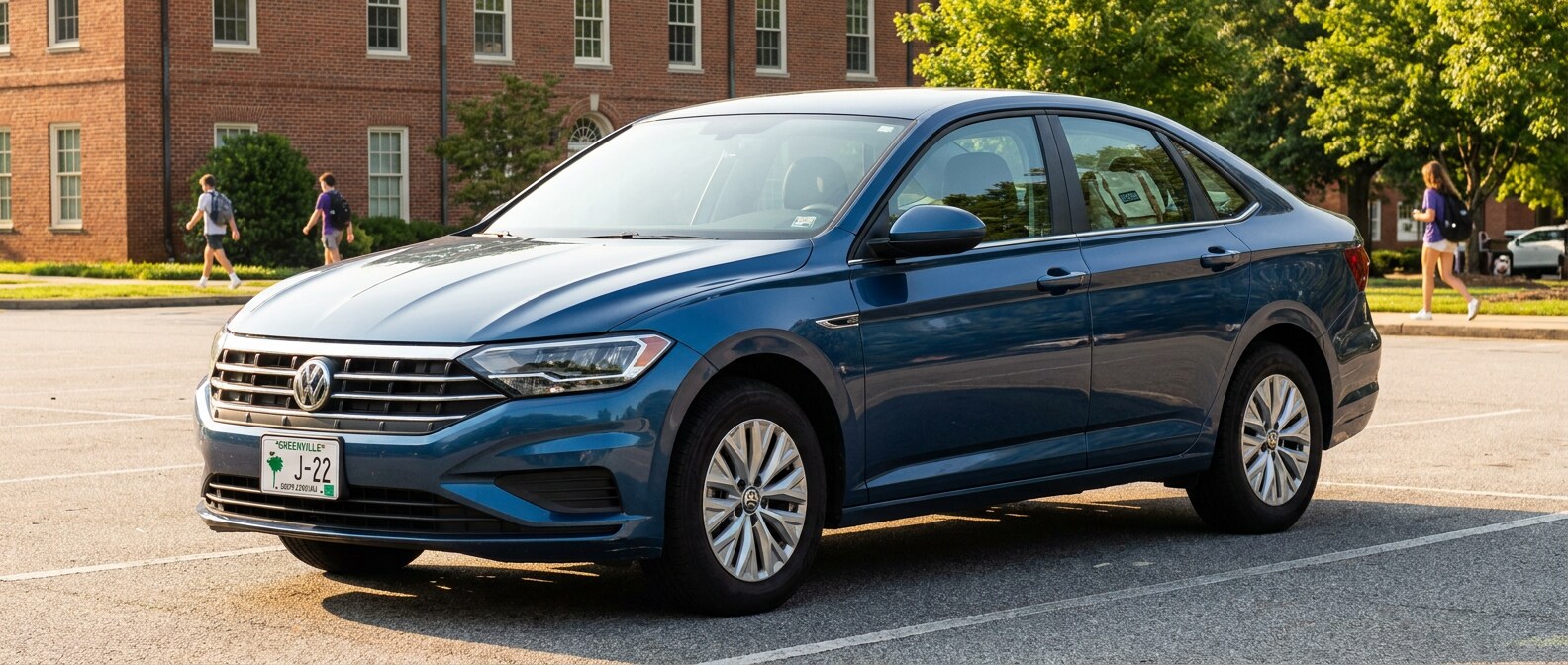
Every August in Greenville, a student or a parent walks in, points toward our used inventory, and says, "We'd love a Volkswagen but we've heard German cars are a money pit." We get it. That reputation has floated around since the 1990s, and for some older models, it wasn't entirely wrong. But applying that logic to a 2022 or newer Jetta is like refusing a smartphone because landlines were expensive to repair.
The useful answer sits between "German cars are fine" and "avoid them entirely." It comes down to knowing exactly which model years to target, what to inspect before you sign, and why verified safety ratings should anchor your decision more than forum horror stories.
The Volkswagen Jetta is the natural starting point for this conversation. Let's be precise about why.
Is the "German Cars Are Too Expensive" Myth Actually True?
Partly, and only for a narrow slice of the lineup, because the reputation grew out of specific older Volkswagen models rather than the whole brand, and it does not describe a well-chosen 2022 or newer used Jetta running the 1.5-liter engine on regular fuel with documented service behind it.
| The Myth | What the Data Actually Shows |
|---|---|
| "German cars require premium fuel" | The 2026 Jetta runs on regular 87-octane gasoline (Volkswagen/EPA official specs) |
| "Volkswagen Jettas are unreliable" | NHTSA complaint data shows 2022+ Jettas (1.5L engine) have a fraction of the complaints filed against 2019-2021 cars (1.4L engine) |
| "Used German cars always need expensive repairs" | Documented NHTSA recalls on the 2021 Jetta/Tiguan were software updates and hardware fixes covered at no charge by dealers |
| "Any Volkswagen is too risky for a student" | The 2023 Volkswagen Tiguan earned the IIHS Top Safety Pick+, the agency's highest designation |
| "Maintenance costs are always sky-high" | The 1.5L TSI in 2022+ Jettas uses a timing chain (not a belt), eliminating one of the most-cited costly service items |
| "High mileage kills a Volkswagen quickly" | Volkswagen's MQB-platform cars regularly reach 100,000+ miles with documented regular maintenance |
The table above is the backbone of this guide. Every row is sourced. Volkswagen's own published specs for the fuel type, NHTSA's complaint database for the engine comparison, and IIHS records for the safety designation. A myth that isn't attached to a specific model year or engine generation is just a story.
The fair caveat, and we'll say it plainly, is that the 2019-2021 1.4-liter Jetta is the car that earned the reputation some people still apply to the whole lineup, and NHTSA logged 548 of the 742 total complaints across the 2019-2025 Jetta run on those earlier cars. If you're shopping in that window, you'll want to be more careful rather than skip Volkswagen altogether, and we'll tell you how.
What This Means for Students Commuting Around Greenville
Greenville's geography makes this used-car choice unusually consequential, because students running I-85 to Spartanburg or I-385 down toward Anderson put genuine highway miles on a car every day, often 30-50 miles round-trip, so you're buying a daily commuter. Greenville sits on the I-85 corridor between Atlanta and Charlotte. A commuter profile is a different animal from a weekend errand-runner.
The Volkswagen Tiguan fits a different student need, with more interior room, standard safety tech on every trim, and the NHTSA 5-star overall safety rating on the recently redesigned generation. What it doesn't have is the Jetta's fuel economy advantage on those long highway stretches. The EPA rates the Jetta S at 29 city / 40 highway mpg combined (34 mpg), a figure that genuinely matters when you're filling up three times a month on a college schedule.
We'd be doing you a disservice by skipping the obvious point. The Tiguan costs more used than a comparable Jetta. Both are worth it in the right situation. The Jetta is the efficiency pick, and the Tiguan is the space-and-safety pick for a student who may be hauling gear, a roommate, or heading toward the Blue Ridge on weekends.
Browse our used Volkswagen inventory to see what's currently on the lot, but read the inspection checklist below before you narrow it down.
For a Greenville student commuting on I-85 or I-385, the 2022+ Jetta with the 1.5-liter engine is the specific used target worth pursuing, not the broader "used Volkswagen" category.
Team observation: On the used lot, the OBD-II port is the easy thing to overlook while the exterior gets all the attention. Plugging in a scan tool to check for pending fault codes (not just cleared ones) is one of the single most useful steps before any purchase decision. Any Volkswagen-trained technician can run this in minutes.
So What Should You Actually Do?
Start with the NHTSA recall check, then work down a short inspection list, because a used Volkswagen rewards the buyer who verifies the specific car in front of them, and the same badge can hide either a clean commuter or a neglected project depending on how it was maintained. Go to nhtsa.gov, enter the VIN of the car you're considering, and look at two things, open recalls (fixes not yet performed) and the recall history. An open recall on a used Jetta or Tiguan isn't automatically a dealbreaker. If the fix is a free software update or a dealer-corrected hardware issue, you're looking at a scheduled appointment rather than a repair bill. What matters is whether it's been completed.
Then run through this inspection checklist before you commit.
- VIN recall check (nhtsa.gov): Confirm any documented recalls and their completion status.
- OBD-II scan for fault codes: A Volkswagen-trained service tech can pull current and pending codes in minutes. Cleared codes that keep returning are the tell.
- Service records: Look for oil change documentation matching the car's mileage. A 2022 Jetta at 45,000 miles should show several documented oil services. No records is a flag.
- Rearview camera function: Specific to the 2021 model year, NHTSA documented a recall (91DV) where the infotainment manufacturing process could keep the rearview camera from displaying. Verify the camera image appears immediately on startup.
- Timing chain, not belt: On 2022+ Jettas, there's no timing belt service interval to worry about. On pre-2019 models, ask whether the timing belt has been replaced.
- Tire tread and suspension feel: The I-85/I-26 corridor puts real highway miles on tires. Check tread depth and listen for any suspension noise during a test drive that includes a highway on-ramp.
- Infotainment and driver-assistance systems: The IQ.DRIVE suite (which includes Forward Assist and Travel Assist on equipped trims) should function cleanly. Buttons that don't respond or cameras that glitch aren't cosmetic issues.
Bring the car to our service center before finalizing the purchase if you want a Volkswagen-trained technician to run the diagnostic. We're glad to do it.
The Two Questions Students Ask Us Most
Do I really need to worry about German car maintenance costs on a budget?
Yes, but not in the way the myth frames it. The maintenance cost concern is legitimate for high-mileage, neglected, or pre-2019 Volkswagen models with the older 1.4-liter engine. A well-documented 2022+ Jetta with the 1.5-liter TSI running on regular 87-octane gasoline is a different car from the one generating forum complaints. The key word is "documented." A used car with no service records forces you to assume deferred maintenance, and that's where cost surprises actually come from, not the Volkswagen badge on the hood.
Is the Volkswagen Tiguan safe enough for a first-time driver?
The 2023 Volkswagen Tiguan earned the IIHS Top Safety Pick+ designation. NHTSA awarded the redesigned Tiguan a 5-star overall safety rating. Every current Tiguan comes standard with IQ.DRIVE driver assistance, which includes Forward Assist (automatic emergency braking) and Blind Spot Monitor on equipped trims. For a first-time driver, those active safety systems are worth more than any passive safety rating alone. The honest tradeoff is real. The Tiguan is larger and costs more used than a Jetta, which is a genuine consideration on a student budget, and we'll tell you that plainly rather than steer you toward the pricier option.
Categories:
Social