
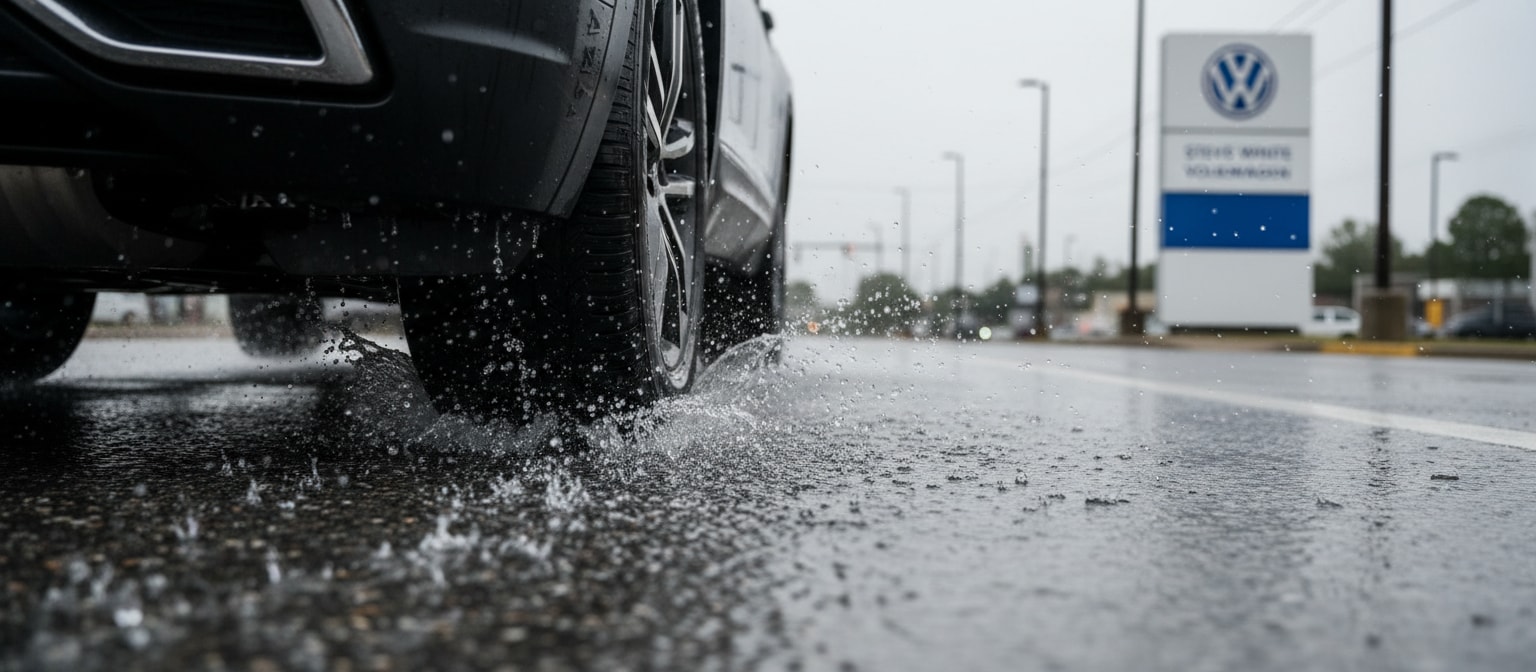
Checking your Volkswagen tire tread depth in Greenville is the single most important maintenance task before the Upstate’s heavy spring downpours arrive. If you’ve noticed your Jetta or Tiguan sliding slightly on a wet entrance ramp to I-85, your tires are likely telling you they can no longer move water effectively.
Most drivers wait until a scary hydroplaning incident to think about their rubber, but proactive checking ensures your family stays safe and your VW handles as the engineers intended. This guide provides the clinical clarity you need to decide if your tires are ready for another season or if it is time for a professional update.
The Upstate Driver’s Tread Diagnostic
Understanding your tire health starts with identifying how you use your vehicle across Spartanburg and Anderson. Not every driver wears down their rubber at the same rate, and the risk looks different depending on your daily route.
- The Highway Commuter: If you spend two hours a day on I-385, heat and high-speed friction are your main concerns. You require maximum tread to maintain stability during sudden afternoon cloudbursts.
- The School-Zone Parent: For those navigating Pelham Road or Taylors in an Atlas, your priority is "bite." Frequent stop-and-go traffic requires deep grooves to ensure your braking distance remains short.
- The Mountain Adventurer: If your weekends involve heading up toward Travelers Rest or Hendersonville, you deal with uneven mountain roads. You need lateral grip to handle hilly curves safely.
Knowing where you fit helps you View New Inventory or service options with a clear goal in mind for your specific driving style.
Matching Your Tread Depth to Your Driving Reality
| If You're This Buyer | Consider This | Why It Fits |
|---|---|---|
| Long-distance Commuter | 6/32” or deeper | Ensures maximum water displacement at 70 mph on I-85. |
| Local Neighborhood Driver | 4/32” to 5/32” | Sufficient for lower speeds but requires caution in heavy rain. |
| Safety-First Parent | New Tire Replacement | Provides the shortest possible stopping distance at red lights. |
Once your tires hit the 4/32” mark, they lose about 50% of their ability to grip a wet road compared to new rubber. This is the "tipping point" where many About Us stories at our dealership begin, as drivers realize peace of mind is worth more than squeezing out a few more miles.
Navigating the S-Curves and Spring Storms
Greenville's geography presents unique challenges for older tires. The "S-curves" near downtown and the frequent elevation changes in the foothills put extra lateral stress on your Volkswagen’s suspension and tire sidewalls.
When your tread depth is low, you’ll feel a "floating" sensation when hitting a puddle. This is actually your tire losing contact with the pavement. It isn't just a nuisance; it’s a total loss of control for a split second.
Beyond safety, thin tread increases road noise. If your cabin feels louder than it used to during your commute from Anderson, it’s likely because the rubber has hardened and the grooves are too shallow to muffle the sound of the pavement.
Protecting Your Investment and Your Peace of Mind
Addressing tire wear early isn't just about the rubber; it's about the long-term health of your Volkswagen. Unevenly worn tires can lead to alignment issues and premature wear on your struts and shocks.
By the time you reach year three of ownership, a simple tire rotation or replacement can make your car feel brand new again. You'll notice the steering feels sharper and the "thud" over potholes in Spartanburg feels more dampened.
Choosing to Contact Us for a quick digital tread depth reading takes the guesswork out of the equation. It turns a moment of "braking anxiety" into a future of predictable performance.
Common Questions About Volkswagen Tire Tread Depth in Greenville
How do I check my Volkswagen tire tread depth in Greenville?
You can check your tread depth using a simple penny test or a dedicated gauge. Insert a penny into the groove with Lincoln's head down; if you can see his entire head, your tread is below 2/32” and is legally bald and unsafe for Greenville rain.
What is the safe tire tread depth for Upstate SC rain?
While 2/32” is the legal limit, most technicians recommend at least 4/32” for safe driving in the Upstate. Greenville’s heavy spring downpours require deeper grooves to prevent hydroplaning on high-speed corridors like I-85.
Does low tire tread affect my Volkswagen’s fuel economy?
Yes, worn tires can slightly decrease your fuel efficiency because the rubber no longer rolls as efficiently. More importantly, uneven wear often signals an alignment issue, which forces your engine to work harder during your daily commute.
Why does my VW steering wheel vibrate at highway speeds?
A vibrating steering wheel often indicates that your tires are out of balance or have uneven tread wear. This is common for Greenville drivers who frequent the highway, and it should be addressed quickly to avoid damaging your suspension components.
Ensuring Your VW is Ready for the Road Ahead
Maintaining healthy tires is the easiest way to preserve the refined driving experience your Volkswagen was built to provide. Whether you are driving an Atlas through Greer or a Jetta in downtown Greenville, the right tread depth ensures you are always in control.
If you value a quiet cabin and confident braking, checking your tires today is the smart move. You can Schedule Service for a professional evaluation or View Used Inventory to see how well-maintained vehicles should look and feel.
Categories:
Social