
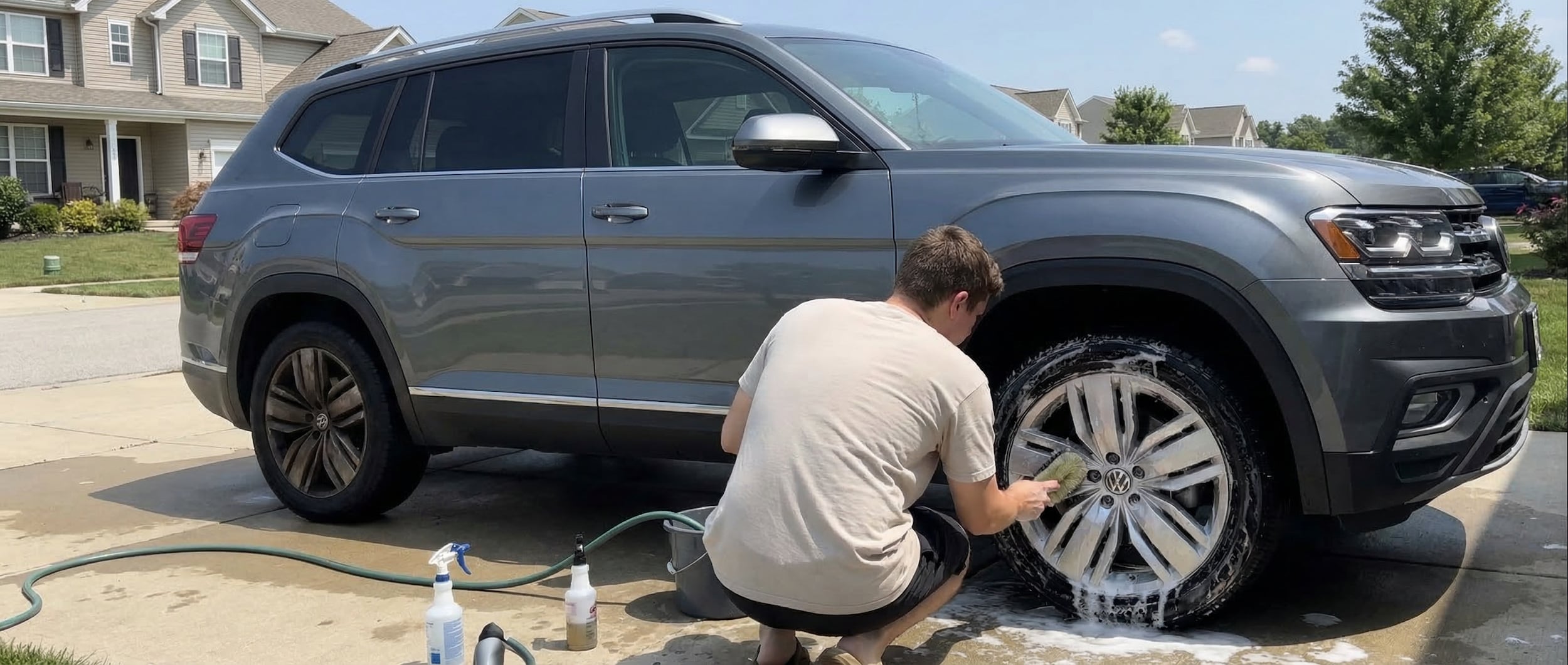
Volkswagen® owners in Greenville, SC face a unique challenge - those stylish alloy wheels that look stunning on your Tiguan™ or Atlas™ can become magnets for stubborn brake dust, especially during our humid South Carolina summers when frequent braking on I-85 and Woodruff Road creates extra buildup. Understanding how to properly clean and protect your VW's wheels isn't just about aesthetics; it's about preserving your investment and maintaining the sophisticated appearance that drew you to the brand in the first place.
Why Volkswagen Wheels Require Special Attention
German engineering prioritizes stopping power, which means your VW uses high-performance brake pads that generate more brake dust than typical vehicles - but this dust contains metallic particles that bond aggressively to wheel surfaces when exposed to Greenville's humidity levels above 70%. The combination of premium brake components and our local climate creates a perfect storm for wheel contamination.
Your Atlas or Tiguan came equipped with carefully designed alloy wheels that complement the vehicle's aesthetic. These aren't just functional components - they're part of what makes your VW stand out at Falls Park or when you're cruising down Main Street. However, the same intricate designs that make these wheels attractive also create numerous crevices where brake dust accumulates.
Did you know? Volkswagen's brake pads contain up to 30% more metallic content than standard pads, providing superior stopping power but requiring wheel cleaning every 2-3 weeks in humid climates like Greenville's.
The good news is that with the right approach and products, maintaining pristine wheels on your VW is completely manageable. The key lies in understanding the specific needs of German alloy wheels and adapting your cleaning routine to match our local conditions.
Essential Cleaning Products for VW Wheels
Professional detailers serving the Greenville area recommend specific products for Volkswagen wheels based on our experience with thousands of vehicles navigating everything from morning commutes on I-385 to weekend adventures in the Blue Ridge Mountains.
| Product Type | Recommended pH | Best For | Frequency |
|---|---|---|---|
| Acid-Free Wheel Cleaner | 6.5-7.5 | Weekly maintenance | Every 1-2 weeks |
| Iron Removing Gel | 5.0-6.0 | Heavy buildup | Monthly |
| Wheel Sealant | Neutral | Protection | Every 3 months |
| Soft Bristle Brushes | N/A | Spoke cleaning | Each wash |
The most critical factor is avoiding harsh acids that can damage your VW's clear-coated wheels. While these aggressive cleaners might work faster, they'll eventually cause pitting and discoloration that's expensive to repair. Instead, focus on pH-balanced formulas specifically designed for European alloy wheels.
For Greenville drivers, timing your wheel cleaning matters too. Our afternoon thunderstorms mean morning cleaning sessions work best - you'll avoid water spots from our mineral-rich water and have time for proper drying before evening humidity sets in.
Your choice of tools matters as much as your cleaning products. Invest in these essential items:
- Dedicated wheel brushes with soft bristles
- Microfiber towels reserved only for wheels
- Foam cannon or spray bottles for even product distribution
- Wheel stands or jack for better access to inner barrels
- Quality hose nozzle with adjustable pressure settings
These tools aren't just conveniences - they're investments in maintaining your VW's value. Consider that professional wheel restoration can cost $150-300 per wheel, making a $50 cleaning kit a smart financial decision.
Step-by-Step Wheel Cleaning Process
The difference between amateur and professional wheel cleaning lies in technique, not just products - start by ensuring your wheels are cool to the touch, as hot surfaces cause cleaning products to evaporate prematurely and can lead to staining.
Step 1: Initial Rinse and Inspection
Begin with a thorough rinse using moderate pressure, working from top to bottom. This removes loose contaminants and reveals problem areas. Pay special attention to the inner barrel where brake dust accumulates heavily on vehicles driven regularly on busy corridors like Laurens Road.
Step 2: Product Application
Spray your chosen wheel cleaner liberally, ensuring complete coverage of all surfaces. For Golf GTI and Golf R owners who enjoy spirited driving, you might need a stronger iron-removing formula. Let the product dwell according to manufacturer instructions - typically 3-5 minutes.
Step 3: Agitation and Detail Work
Work systematically around each wheel using appropriate brushes:
- Long-handled brushes for inner barrels
- Medium brushes for spoke faces
- Detail brushes for lug nut recesses
- Soft brushes for delicate center caps
Pro tip: Clean one wheel completely before moving to the next. This prevents product from drying on the surface and ensures consistent results across all four wheels.
Step 4: Thorough Rinsing
Rinse each wheel twice - once after agitation and again after neighboring wheels to remove any overspray. Use higher pressure for the inner barrel but reduce pressure for face surfaces to avoid forcing water into wheel weights or sensors.
Step 5: Drying and Protection
Dry wheels completely using dedicated microfiber towels or compressed air. Apply wheel sealant or wax while the surface is clean and dry. This protective layer makes future cleaning sessions significantly easier and provides a barrier against brake dust adhesion.
For Jetta and Taos owners who primarily use their vehicles for commuting, this process might be needed every two weeks. However, ID. Buzz owners taking frequent family trips to Table Rock State Park might find weekly cleaning necessary during peak season.
Common Mistakes That Damage VW Alloy Wheels
Even experienced car enthusiasts make wheel cleaning errors that cause long-term damage - understanding these pitfalls helps protect your investment and maintain your Volkswagen's appearance throughout years of Upstate driving.
Using Household Cleaners
Never use kitchen degreasers, bathroom cleaners, or dish soap on your wheels. These products contain surfactants and chemicals that strip protective coatings and can cause aluminum oxidation. The damage might not appear immediately but becomes evident as white spotting or dulling over time.
Automatic Car Wash Wheel Cleaners
Those purple or pink foam sprays at automatic washes contain harsh acids designed for speed, not safety. While convenient during a rushed lunch break in downtown Greenville, they gradually etch your wheel finish. The damage accumulates with each wash until restoration becomes necessary.
Pressure Washing Mistakes
High-pressure washing seems efficient but can force brake dust deeper into wheel pores and potentially damage these sensitive components:
- Wheel weights affecting balance
- TPMS sensors in your Tiguan or Atlas Cross Sport
- Center cap clips and emblems
- Brake caliper paint or protective coatings
Neglecting Inner Barrels
The back side of your wheels accumulates even more brake dust than visible surfaces. Ignoring these areas allows corrosion to start from behind, eventually showing through as pitting on the face. This is particularly important for Greenville drivers who encounter road salt during occasional winter weather trips to the mountains.
Cross-Contamination Issues
Using the same towels or brushes for wheels and paint creates swirl marks and scratches on your VW's body. Always maintain separate cleaning tools for wheels, and wash them separately from other detailing equipment.
Seasonal Considerations for Greenville VW Owners
South Carolina's climate creates unique challenges throughout the year, requiring adjusted wheel care strategies to maintain your Volkswagen's appearance regardless of season.
Spring Challenges (March-May)
Pollen season in the Upstate adds another layer of contamination to brake dust. The yellow-green film bonds with metallic particles, creating a stubborn residue. During peak pollen times around Furman University and Cleveland Park, increase cleaning frequency and consider using a pre-rinse foam to loosen combined contaminants.
Summer Intensity (June-August)
Extreme heat accelerates brake dust production and makes it bond more aggressively to wheel surfaces. Clean wheels during morning hours before temperatures exceed 85°F. The combination of high humidity and heat around Falls Park on the Reedy creates ideal conditions for brake dust to etch into unprotected wheels.
| Season | Primary Challenge | Cleaning Frequency | Special Considerations |
|---|---|---|---|
| Spring | Pollen + brake dust | Every 10 days | Pre-foam treatment |
| Summer | Heat bonding | Weekly | Early morning only |
| Fall | Leaf staining | Every 2 weeks | Remove debris first |
| Winter | Salt residue | After mountain trips | Immediate cleaning |
Fall Maintenance (September-November)
Falling leaves create acidic residue when decomposing on wheel surfaces. Areas near Paris Mountain State Park see heavy leaf accumulation. Remove organic debris immediately and increase protection applications before winter.
Winter Precautions (December-February)
While Greenville rarely sees snow, trips to the Blue Ridge Mountains expose wheels to road salt and mag-chloride. These chemicals aggressively attack alloy wheels. Clean wheels within 24 hours of mountain driving, using slightly warm water to dissolve salt crystals effectively.
Professional vs. DIY Wheel Care
Making informed decisions about wheel maintenance involves understanding when professional intervention makes sense versus handling care yourself - both approaches have merit depending on your situation and vehicle usage.
When DIY Makes Sense
Regular maintenance cleaning every 1-2 weeks is perfect for DIY care. You'll save money and maintain better control over product selection and technique. For newer vehicles like the 2024 Atlas Cross Sport or recently redesigned Jetta, establishing a consistent DIY routine prevents major buildup issues.
Most Greenville VW owners find success with DIY care when they:
- Maintain a regular cleaning schedule
- Invest in quality products and tools
- Have covered parking or garage space
- Enjoy the detailing process as a hobby
- Drive primarily in urban/suburban settings
When Professional Service Adds Value
Professional detailing becomes valuable for several scenarios. Severe neglect requiring restoration work demands professional equipment and expertise. Annual deep cleaning with ceramic coating application provides long-term protection worth the investment. Check out our new inventory if you're considering a fresh start with a new VW.
Professional Service Benefits:
- Industrial-grade products not available retail
- Specialized tools for complete barrel cleaning
- Experience identifying early wheel damage
- Time savings for busy professionals
- Warranty-safe practices and documentation
Consider professional services quarterly to complement your DIY routine. This hybrid approach maximizes protection while managing costs effectively. Many VW owners in Travelers Rest and Simpsonville find this combination ideal for their busy lifestyles.
Long-Term Wheel Protection Strategies
Protecting your Volkswagen's wheels extends beyond cleaning - implementing comprehensive protection strategies ensures lasting beauty and reduces maintenance effort over time.
Ceramic Coatings
Modern ceramic coatings create a sacrificial barrier between brake dust and wheel surfaces. These products bond at a molecular level, providing 12-24 months of protection. While initial application requires meticulous preparation, the reduced cleaning effort pays dividends for busy Greenville professionals commuting daily on I-85.
Application tips for maximum effectiveness:
- Wheels must be completely decontaminated first
- Apply in controlled environment away from dust
- Allow proper curing time (usually 24-48 hours)
- Maintain with pH-neutral products only
- Reapply according to manufacturer timeline
Wheel Wax and Sealants
For those not ready for ceramic coating investment, quality wheel waxes and sealants offer good protection with easier application. These products typically last 2-3 months and significantly reduce brake dust adhesion. Perfect for seasonal protection before Greenville's challenging summer months.
Did you know? Volkswagen's factory wheel coating lasts approximately 3-4 years under normal conditions, but Greenville's humid climate can reduce this to 2-3 years without proper maintenance.
Prevention Through Driving Habits
Your driving style directly impacts brake dust generation. Smooth, progressive braking reduces pad wear and dust production. This is especially relevant for Golf GTI and Golf R drivers who enjoy spirited driving on scenic routes around Lake Robinson - performance driving dramatically increases brake dust generation.
Consider these driving adjustments:
- Increase following distance to reduce panic braking
- Use engine braking on long descents
- Coast to decelerate when possible
- Avoid riding brakes in stop-and-go traffic
- Plan routes to minimize heavy braking situations
Common Questions About Brake Dust and VW Wheels in Greenville, SC
How often should I clean my Volkswagen's wheels in Greenville's humid climate?
Clean your VW's wheels every 1-2 weeks in Greenville's humid conditions to prevent brake dust from bonding permanently to the surface. During summer months when humidity regularly exceeds 70%, weekly cleaning is ideal, while spring and fall allow for bi-weekly maintenance. The key is consistency - regular cleaning takes 15 minutes per wheel versus hours of restoration work.
What's the best wheel cleaner for my Atlas that won't damage the factory finish?
Use pH-balanced (6.5-7.5), acid-free wheel cleaners specifically designed for clear-coated alloy wheels on your Atlas. Look for products labeled "safe for all wheel finishes" and avoid anything containing hydrofluoric or sulfuric acid. German-made wheel cleaners often work best with VW's factory coatings since they're formulated for European standards.
Can automatic car washes in Greenville damage my VW's wheels?
Yes, automatic car washes can damage VW wheels through harsh chemical cleaners and recycled water containing brake dust particles from other vehicles. The acidic wheel cleaners used for speed can etch your clear coat, while spinning brushes may scratch intricate wheel designs. Touchless washes are safer but still use aggressive chemicals that can dull finishes over time.
Why do my Golf GTI's wheels get dirtier faster than my previous car?
Golf GTI wheels accumulate brake dust faster due to high-performance brake pads containing more metallic content for superior stopping power. Performance-oriented VWs like the GTI and Golf R use semi-metallic pads that generate up to 40% more dust than standard ceramic pads. This trade-off provides shorter stopping distances and better heat dissipation during spirited driving.
Should I switch to ceramic brake pads to reduce dust on my Tiguan?
Ceramic brake pads produce less visible dust but may compromise your Tiguan's designed braking performance and increase stopping distances. While ceramic pads are quieter and cleaner, VW engineers specifically chose pad compounds to match each model's weight and performance requirements. Consult our service team before changing brake pad types to ensure safety and warranty compliance.
What causes white spots on my VW wheels despite regular cleaning?
White spots on VW wheels typically indicate calcium deposits from hard water or early-stage corrosion from brake dust etching. Greenville's water contains minerals that leave deposits when air-dried, while acidic brake dust can eat through clear coat if left too long. Use distilled water for final rinsing and always dry wheels completely to prevent these issues.
Maintaining spotless wheels on your Volkswagen in Greenville, SC requires consistent care and the right approach, but the results are worth the effort. Your VW represents German engineering at its finest, from the practical Taos perfect for navigating Haywood Mall traffic to the adventurous Atlas Cross Sport ready for Blue Ridge Parkway expeditions. By following these expert tips and establishing a regular cleaning routine, you'll protect your investment while ensuring your vehicle always looks its best, whether parked downtown or cruising past the Peace Center. The team at Steve White Volkswagen understands the pride you take in your vehicle's appearance and is here to support you with professional service options and expert advice tailored to our unique Upstate climate.
Categories:
Social