
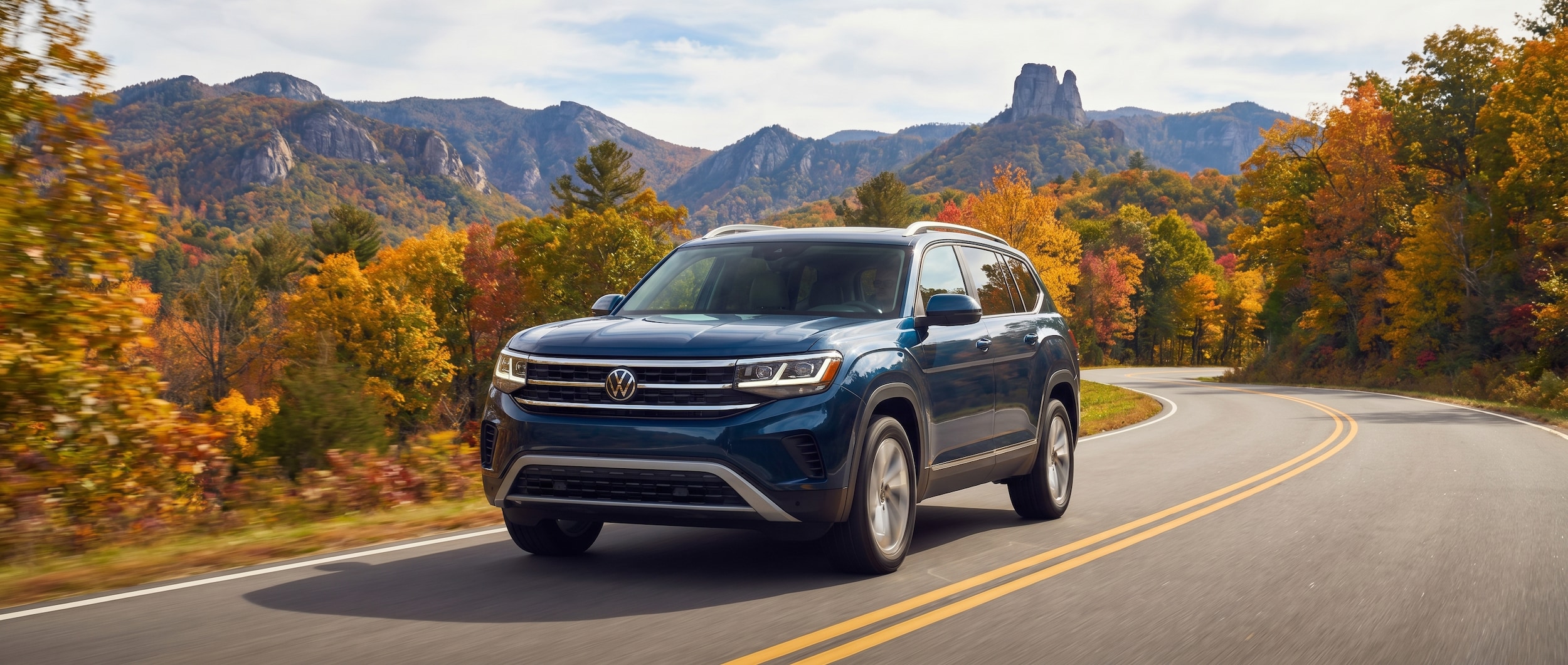
The 74-mile journey from Greenville, SC to Chimney Rock winds through some of the most dramatic elevation changes in the Southeast, with hairpin turns that would make a sports car driver nervous. Yet drivers who tackle this scenic route in a Volkswagen® SUV report something surprising: these family haulers handle mountain switchbacks with the confidence of vehicles half their size. Understanding why starts with recognizing that not all SUVs are engineered equally for mountain driving.
What Makes Mountain Driving Different from Your Daily Greenville Commute
Your morning cruise down Woodruff Road hits zero elevation changes, but the moment you head north on US-25 toward the Blue Ridge Mountains, physics becomes your passenger. Within 30 miles of leaving downtown Greenville, you'll climb over 1,000 feet while navigating curves that tighten without warning. Add the weight of passengers and gear, and suddenly your vehicle's engineering matters more than its cargo space.
The route to Chimney Rock throws three specific challenges at drivers:
- Sudden elevation gains that stress engines and transmissions
- Decreasing radius turns that test suspension systems
- Steep downhill grades requiring sustained braking control
Mountain roads demand more from a vehicle's fundamental architecture than any specification sheet reveals. The question isn't whether an SUV can make the journey - it's how composed and confident you'll feel doing it.
Engineering Features That Transform Tiguan and Atlas into Mountain Performers
Volkswagen's 4MOTION® all-wheel drive system reads road conditions 100 times per second, redistributing power between wheels before you even sense a loss of traction. On those rain-slicked switchbacks ascending toward Chimney Rock, this proactive system maintains grip while other SUVs react after slippage begins.
| Feature | Mountain Driving Benefit | Available On |
|---|---|---|
| 4MOTION® AWD | Prevents wheel slip before it starts | Atlas, Atlas Cross Sport, Tiguan |
| Direct-Injection Turbo | Maintains power at high elevation | All VW SUV models |
| Progressive Steering | Reduces steering effort in tight turns | Atlas, Tiguan |
| Hill Descent Control | Manages speed on steep descents | Atlas with towing package |
| Drive Mode Selection | Optimizes throttle and transmission response | All current models |
The turbocharged engines found across Volkswagen's SUV lineup solve a problem naturally aspirated engines face in mountain driving: power loss at elevation. While traditional engines lose approximately 3% of power per 1,000 feet of elevation gain, turbocharged powerplants compensate by forcing more air into the combustion chamber.
Did you know? The parking area at Chimney Rock sits at 2,280 feet elevation - nearly 1,400 feet higher than Greenville. That elevation change would rob a naturally aspirated engine of about 4% of its power, but turbocharged VW engines maintain consistent performance.
Real-World Performance: Tackling Highway 9 Through Bat Cave
The stretch of Highway 9 between Lake Lure and Bat Cave tests every aspect of vehicle dynamics with its combination of blind curves, sudden elevation changes, and narrow lanes. Local driving enthusiasts know this section as one of the most demanding in the region.
The Atlas demonstrates remarkable body control through these sequences, thanks to its rigid MQB platform that minimizes flex during cornering. Unlike body-on-frame SUVs that feel disconnected from the road, the Atlas maintains a planted sensation that inspires confidence through blind uphill corners.
Key handling advantages on this challenging route:
- Lower center of gravity than traditional SUVs
- Sophisticated multi-link rear suspension
- Precise electric power steering with variable assist
- Wide track width for stability
The Tiguan, being more compact, excels where the road narrows near the Broad River bridge. Its shorter wheelbase allows quicker direction changes while maintaining the composed ride quality that makes passengers comfortable during the two-hour journey from Greenville.
Essential Driving Techniques for Caesar's Head to Chimney Rock Route
Professional driving instructors recommend specific techniques for maintaining vehicle control on mountain grades, and these become especially relevant on the popular route through Caesar's Head State Park.
Managing Uphill Climbs:
When ascending toward the 3,266-foot summit of Caesar's Head, maintain steady throttle input rather than aggressive acceleration. Your VW's turbocharged engine delivers peak torque from just 1,600 RPM, meaning you don't need high engine speeds for strong climbing power. Select Sport mode to hold gears longer and reduce the transmission's tendency to hunt between ratios.
Controlling Downhill Descents:
The descent from Caesar's Head toward Highway 64 includes several 8% grades where brake management becomes critical. Rather than riding the brakes continuously:
- Engage manual shift mode
- Select a lower gear to use engine compression
- Apply brakes firmly but briefly to scrub speed
- Release brakes between applications to prevent overheating
Cornering Strategy:
Mountain curves often tighten unexpectedly - what locals call "decreasing radius" turns. The proper technique:
- Brake while the vehicle is straight, before turn entry
- Look through the corner to where you want to go
- Apply smooth, progressive steering input
- Gently accelerate once you can see the exit
The progressive steering in both Atlas and Tiguan models reduces the amount of wheel movement needed in tight corners, preventing the sawing motions that unsettle vehicles and passengers alike.
Pre-Trip Inspection Checklist for Mountain Adventures
A mechanical issue on mountain roads creates more than inconvenience - it becomes a safety concern with limited shoulders and cell service gaps.
Before Leaving Greenville:
- [ ] Check tire pressure (mountain temperature changes affect PSI)
- [ ] Verify brake pad thickness
- [ ] Top off washer fluid for clear visibility
- [ ] Test all drive modes
- [ ] Ensure spare tire is properly inflated
Essential Items to Pack:
- [ ] Emergency reflectors or flares
- [ ] Basic tool kit
- [ ] Jumper cables
- [ ] Extra water and snacks
- [ ] Printed map (GPS can fail in mountains)
- [ ] Blanket and first aid kit
Pro tip: Fill your tank in Greenville before departing. While gas stations exist along the route, mountain fuel prices typically run 30-50 cents higher per gallon. The Atlas's 18.6-gallon tank provides plenty of range for the round trip.
Comparing VW SUVs for Your Chimney Rock Adventure
Choosing between Volkswagen SUV models for mountain driving depends on your specific priorities and passenger needs.
| Model | Best For | Mountain Driving Strengths | Considerations |
|---|---|---|---|
| Atlas | Families of 6-7 | Stable platform, powerful V6 option, massive cargo space | Larger size on narrow sections |
| Atlas Cross Sport | Couples or small families wanting style | Same mechanicals as Atlas in sportier package | Less rear headroom than Atlas |
| Tiguan | Solo adventurers or couples | Nimble handling, easier parking at attractions | Less cargo space for gear |
Each model shares Volkswagen's commitment to precise handling and turbocharged efficiency, but their size differences become apparent on tighter mountain sections. The Atlas excels on interstate approaches and provides superior comfort for passengers, while the Tiguan shines on technical sections where agility matters.
Consider your typical adventure crew size and gear requirements. Mountain bikers might prefer the Atlas's cavernous cargo area, while photographers seeking access to narrow overlooks could favor the Tiguan's maneuverability.
Common Questions About VW Mountain Driving from Greenville, SC
How do VW SUVs perform in winter conditions on mountain roads near Greenville, SC?
Volkswagen SUVs with 4MOTION® all-wheel drive excel in winter mountain conditions, automatically sending power to wheels with the most traction within milliseconds. The system works seamlessly with stability control and ABS to maintain control on icy mountain passes like those found on Highway 276 near Caesar's Head during winter months. Many Greenville drivers report confidence-inspiring performance even during unexpected mountain snow events.
What's the fuel economy impact when driving to Chimney Rock from Greenville?
Mountain driving typically reduces fuel economy by 15-20% compared to highway ratings due to elevation changes and increased engine load. The Tiguan achieves approximately 22-24 MPG on the Chimney Rock route, while the Atlas V6 delivers 18-20 MPG. Both vehicles' turbocharged engines minimize the efficiency penalty compared to naturally aspirated competitors struggling at altitude.
Does the VW warranty cover mountain driving wear in South Carolina?
Yes, normal mountain driving falls within Volkswagen's comprehensive warranty coverage, including the challenging routes around Greenville, SC. The 6-year/72,000-mile transferable warranty covers powertrain components that work hardest during mountain driving. Regular maintenance at recommended intervals ensures all components handle the extra stress of elevation changes and winding roads.
Which VW safety features activate most on winding mountain roads?
Electronic Stability Control engages frequently on mountain curves, making subtle brake and throttle adjustments to maintain your intended path. Front Assist with Pedestrian Monitoring proves valuable for sudden wildlife encounters common in the Blue Ridge Mountains. Blind Spot Monitor activates during passing maneuvers on two-lane mountain highways, while Hill Hold Assist prevents rollback at scenic overlook parking areas.
Where can I practice mountain driving techniques near Greenville, SC?
Paris Mountain State Park offers excellent practice terrain just 15 minutes from downtown Greenville, with elevation changes and curves similar to longer mountain routes. Highway 11 (Cherokee Foothills Scenic Highway) provides gradual introduction to mountain driving with less dramatic elevation than Chimney Rock. Campbell's Covered Bridge Road near Landrum features twisting sections perfect for building confidence before tackling more challenging routes.
How often should I service my VW if I frequently drive mountain roads from Greenville?
Frequent mountain driving from Greenville warrants following Volkswagen's severe duty maintenance schedule, which recommends oil changes every 5,000 miles instead of 10,000. Brake fluid should be changed every two years due to increased thermal stress from mountain descents. Have your technician inspect brake pads every 15,000 miles, as mountain driving accelerates wear compared to flat terrain around Greenville.
Your Next Mountain Adventure Starts with Confidence
The winding route from Greenville to Chimney Rock transforms from intimidating challenge to memorable adventure when you're equipped with the right vehicle and knowledge. Volkswagen's engineering philosophy - building SUVs that handle like cars while hauling like trucks - proves its worth on every switchback and scenic overlook along the journey. Understanding your vehicle's capabilities and applying proper mountain driving techniques ensures you'll focus on the breathtaking views rather than white-knuckling the steering wheel.
Whether you're drawn to the Atlas's commanding presence or the Tiguan's nimble reflexes, both deliver the confidence needed for exploring the Blue Ridge Mountains. The team at Steve White Volkswagen knows these mountain routes personally and can match you with the ideal SUV for your adventures. Schedule a test drive that includes some of Greenville's hillier terrain, and discover why VW drivers seek out mountain roads rather than avoid them.
Categories:
Social