
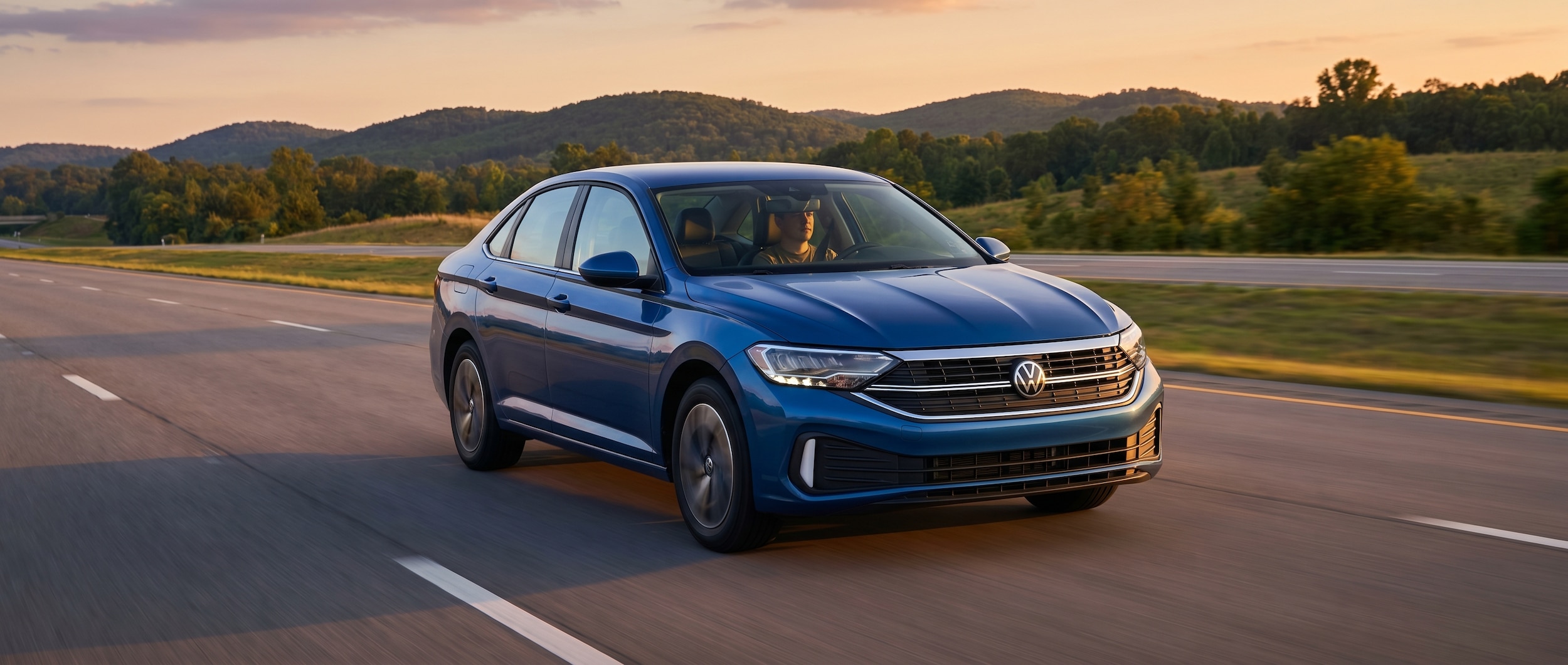
The 103-mile stretch between Greenville, SC and Columbia transforms from a routine commute into an opportunity for exceptional fuel efficiency when you know the right strategies. Whether you're making this drive for business meetings at the State House or visiting students at USC, your Volkswagen Jetta can deliver remarkable comfort and economy along I-385 and I-26. We've logged thousands of miles on this corridor helping customers optimize their driving experience, and the difference proper techniques make - especially through the variable terrain near Clinton - can save you 15-20% on fuel costs while arriving more refreshed.
Understanding Your Route's Impact on Fuel Economy
Your Jetta's fuel consumption changes dramatically based on elevation shifts, and the Greenville to Columbia route presents unique challenges that many drivers overlook. The initial climb out of Greenville adds load to your engine, while the descent toward the Midlands offers recovery opportunities - but only if you adjust your driving style accordingly.
Did you know? The elevation difference between Greenville (966 feet) and Columbia (292 feet) creates natural fuel-saving opportunities through strategic use of momentum and cruise control.
The stretch through Laurens County particularly impacts fuel economy due to rolling hills and frequent speed variations. We've found that maintaining steady throttle input through these sections, rather than aggressive acceleration and braking, improves fuel economy by up to 8 mpg in the Jetta.
| Route Section | Elevation Change | Fuel Economy Impact | Best Driving Strategy |
|---|---|---|---|
| Greenville to Clinton | -374 feet | Moderate improvement | Use cruise control, maintain 70-72 mph |
| Clinton to Newberry | -200 feet | Slight improvement | Coast on descents, gentle acceleration |
| Newberry to Columbia | -100 feet | Minimal change | Steady speed, avoid lane changes |
| Urban Columbia area | Flat | Decreased efficiency | Plan route to minimize stops |
Traffic patterns also significantly affect your fuel consumption. Early morning drives (before 6:30 AM) and mid-afternoon trips (1:00-3:00 PM) typically offer the smoothest flow, allowing your Jetta's efficient turbocharged engine to operate in its sweet spot.
Volkswagen Technology Features That Enhance Highway Comfort
Modern Volkswagen vehicles transform long highway drives through intelligent comfort and efficiency systems that work seamlessly together. The Jetta's available Travel Assist combines adaptive cruise control with lane keeping assistance, reducing driver fatigue significantly on the straight stretches of I-26.
The dual-zone automatic climate control deserves special attention for South Carolina drives. Set the driver and passenger zones independently - we recommend 72°F for the driver to maintain alertness and 74°F for passengers for optimal comfort. This prevents the constant manual adjustments that distract from driving and ensures consistent cabin temperature as you move between the cooler Upstate and warmer Midlands regions.
Key comfort features for highway driving:
- Adaptive Cruise Control (ACC) with Stop and Go
- Lane Keeping System for reduced steering input
- Heated and ventilated seats (available on SEL and above)
- Premium audio system with noise compensation
- Automatic high beam control for pre-dawn drives
The IQ.DRIVE suite of driver assistance features particularly shines on this route. The system's ability to read the road ahead and adjust speed for curves near Prosperity and Chapin reduces the mental load of constant speed management. Drivers report arriving in Columbia feeling notably less fatigued compared to vehicles without these technologies.
Strategic Fuel-Saving Techniques for I-385 and I-26
Maximizing fuel economy on the Greenville to Columbia corridor requires understanding how your driving inputs affect consumption at highway speeds. The most impactful technique involves maintaining momentum through intelligent speed management rather than strict adherence to a single speed.
Pro tip: Use your Jetta's instant fuel economy display to find your vehicle's efficiency sweet spot - typically between 65-70 mph on level ground.
When approaching the uphill sections near Fountain Inn, gradually increase speed on the preceding downslope to build momentum. This technique, called "pulse and glide" in hybrid driving but applicable to all vehicles, reduces the engine load during climbs. However, never exceed safe speeds or 75 mph, as aerodynamic drag increases exponentially above this threshold.
Fuel-saving acceleration technique for highway merging:
- Match traffic speed in the acceleration lane
- Merge smoothly without sudden throttle inputs
- Gradually reach cruising speed over 30-60 seconds
- Engage cruise control once at steady speed
- Maintain 3-4 second following distance to avoid constant adjustments
The Taos and Tiguan, with their slightly higher stance, experience more wind resistance than the Jetta. For these models, maintaining 67-68 mph typically yields optimal fuel economy while still making good time. The aerodynamic design helps, but physics still applies - every 5 mph above 60 increases fuel consumption by approximately 7%.
Weather conditions along Lake Murray can create headwinds that significantly impact fuel economy. On windy days, consider drafting behind larger vehicles (maintaining safe distance) to reduce air resistance, potentially improving fuel economy by 5-10%.
Comfort Optimization for Different Seasons
South Carolina's variable weather demands seasonal adjustments to maintain comfort during your interstate drive. Summer temperatures regularly exceed 95°F in Columbia, while Greenville mornings can start at a comfortable 70°F, requiring dynamic climate management.
During summer months, pre-cool your Volkswagen while it's still plugged in (for the ID. Buzz) or during the last few minutes before departure. This reduces the air conditioning load during the initial miles, improving fuel economy. Once at highway speed, set the AC to recirculation mode for the first 20 minutes, then switch to fresh air to prevent window fogging.
| Season | Greenville Departure | Columbia Arrival | Comfort Settings |
|---|---|---|---|
| Summer | 75-80°F morning | 90-95°F afternoon | AC at 70°F, fresh air after Paris Mountain |
| Fall | 55-65°F | 70-75°F | Climate off, windows cracked until Laurens |
| Winter | 35-45°F | 45-55°F | Heat at 68°F, defrost as needed |
| Spring | 60-70°F | 75-85°F | Fresh air, minimal climate use |
The heated seats and steering wheel (available features) prove invaluable during winter drives, allowing lower cabin temperatures while maintaining comfort. This strategy can improve fuel economy by 3-4% compared to heating the entire cabin to higher temperatures. We recommend using heated seats at level 2 and keeping cabin temperature at 66-68°F for optimal efficiency.
Seat position significantly impacts long-drive comfort. Adjust your seat back angle between 100-110 degrees, ensuring your shoulders maintain contact with the seatback. The lumbar support should create gentle pressure at your belt line. These adjustments reduce fatigue and improve your ability to make smooth, efficient driving inputs.
Planning Your Route for Maximum Efficiency
While I-385 to I-26 represents the most direct route, understanding alternative paths can save fuel during peak congestion periods. The US-276 to US-25 route through Ware Shoals, though 8 miles longer, often provides steadier speeds during Friday afternoon rush hours.
Check traffic conditions before departure using your Volkswagen's built-in navigation or smartphone apps. A 10-minute delay in departure can sometimes save 20 minutes of stop-and-go driving near the I-385/I-26 interchange. The Jetta GLI and Golf GTI's turbocharged engines particularly suffer in stop-and-go conditions, where their efficiency advantages disappear.
Optimal departure times for fuel economy:
- Weekday mornings: 5:30-6:30 AM or 9:30-11:00 AM
- Weekday evenings: 1:00-3:00 PM or after 7:00 PM
- Weekends: Before 8:00 AM or 2:00-5:00 PM
- Fridays: Avoid 3:00-7:00 PM if possible
Plan your fuel stops strategically. The Clinton exit offers competitive prices and easy highway access, while waiting until Columbia often means higher prices and busier stations. Your Jetta's 13.2-gallon tank typically provides sufficient range for a round trip, but topping off in Clinton provides peace of mind and often saves money. Browse our new inventory to explore models with extended range capabilities.
Maintenance Tips for Optimal Highway Performance
Regular maintenance becomes even more critical when you're logging serious highway miles between Greenville and Columbia. Your Volkswagen's engine air filter works harder during highway driving, and the I-26 corridor's pollen levels - especially during spring - can clog filters faster than normal.
Tire pressure dramatically affects both fuel economy and comfort at highway speeds. The recommended pressure for your specific model (found on the driver's door jamb) represents the minimum for normal driving. For extended highway cruising, consider adding 2-3 PSI above the recommendation, checking when tires are cold. This slight increase improves fuel economy and reduces tire heat buildup.
Did you know? Proper wheel alignment can improve your highway fuel economy by up to 10% while also reducing driver fatigue from constant steering corrections.
Highway-focused maintenance checklist:
- ✓ Check tire pressure weekly if commuting regularly
- ✓ Replace engine air filter every 15,000 miles (more often during pollen season)
- ✓ Rotate tires every 5,000-7,500 miles
- ✓ Check alignment if you notice steering pull
- ✓ Use recommended oil grade for optimal engine efficiency
- ✓ Clean windshield and check wipers for clear visibility
The transmission fluid in your Jetta or Tiguan also plays a crucial role in highway efficiency. While modern Volkswagen transmissions are largely maintenance-free, having the fluid checked during regular service ensures optimal shift patterns and fuel economy. If you're putting significant highway miles on your vehicle, it's time to schedule service with technicians who understand the unique demands of regular interstate driving.
Common Questions About Greenville to Columbia Volkswagen Driving
How much fuel does a typical Volkswagen Jetta use driving from Greenville to Columbia?
A Volkswagen Jetta typically consumes 2.5-3.0 gallons for the 103-mile drive from Greenville, SC to Columbia, achieving 34-41 mpg depending on driving conditions and model year. The turbocharged engines excel at steady highway speeds, with newer models featuring stop-start technology saving additional fuel during any traffic delays near Lexington.
What's the best cruise control speed for fuel economy on I-26 in South Carolina?
Set your Volkswagen's cruise control between 67-70 mph for optimal fuel economy on I-26 between Greenville and Columbia. This speed range balances aerodynamic efficiency with reasonable travel time, and the relatively flat sections between Newberry and Columbia allow your engine to maintain peak efficiency at these speeds.
Does using AC significantly impact fuel economy on highway drives in SC?
Air conditioning reduces your Volkswagen's highway fuel economy by approximately 1-2 mpg when maintaining cabin temperatures around 72°F in South Carolina's summer heat. The impact is much less than city driving, and the comfort benefit far outweighs the minimal fuel cost, especially when compared to opening windows which increases aerodynamic drag above 50 mph.
Which Volkswagen models are best for regular Greenville-Columbia commutes?
The Jetta and Jetta GLI excel for regular Greenville-Columbia commutes, offering exceptional fuel economy and comfort features ideal for the 206-mile round trip. The Taos provides a higher seating position preferred by some commuters, while still achieving over 30 mpg highway, and both models include available driver assistance features that reduce highway driving fatigue.
How often should I service my Volkswagen if driving between Greenville and Columbia weekly?
Service your Volkswagen every 5,000 miles or 6 months when commuting weekly between Greenville and Columbia, which typically means service every 2-3 months for regular commuters. Highway miles are easier on engines than city driving, but regular oil changes and tire rotations ensure peak efficiency and reliability for your interstate travels.
Where are the best rest stops between Greenville and Columbia on I-385/I-26?
The Clinton exit (Exit 52) offers clean facilities and multiple fuel options approximately halfway between Greenville and Columbia, making it ideal for breaks. Newberry (Exit 74) provides another good option with easy highway access, while the Peak exit near Prosperity offers a quieter stop with less traffic for those preferring a calmer break.
Your Journey Awaits with Confidence and Efficiency
Mastering the Greenville to Columbia drive transforms a routine journey into an opportunity to enjoy your Volkswagen's engineering excellence while maximizing efficiency. Whether you're drawn to the Jetta's remarkable fuel economy, the Taos's commanding view, or the Golf GTI's perfect balance of performance and efficiency, understanding these optimization techniques ensures every mile delivers both savings and satisfaction. The combination of strategic driving techniques, proper maintenance, and smart use of technology can reduce your fuel costs by 20% or more while arriving refreshed and ready for your destination. When you're ready to experience how the latest Volkswagen technology can enhance your regular commute or occasional trips between the Upstate and Midlands, visit Steve White Volkswagen where our team understands the unique demands of South Carolina driving.
Categories:
Social