
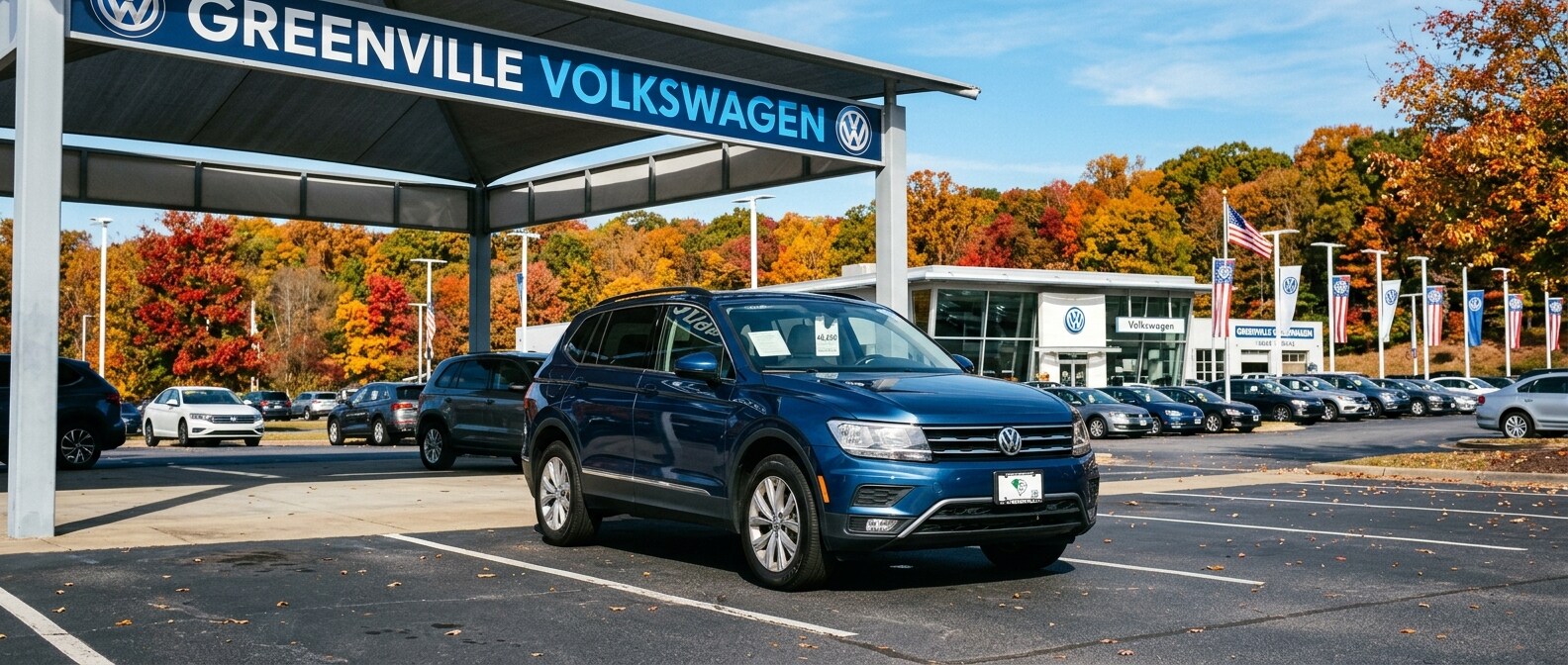
November really is the best month to buy a used car, and we're not saying that to move metal. Capital One's pricing data shows November as the month when used-vehicle prices soften more than any other, as dealers work to clear inventory before the new year. Here in Greenville, that means our pre-owned inventory is turning over fast and sellers are motivated. If you've been eyeing a used Volkswagen, the window's open. Walk in without a checklist, though, and a good opportunity becomes an expensive lesson.
The bottom line is simple. The right used Volkswagen is an excellent purchase; the wrong one is a maintenance bill that follows you home. What separates those two outcomes is a 30-minute verification process you can run before you ever sit in the driver's seat. This checklist shows you what that looks like for German-engineered vehicles in the Upstate South Carolina market.
What Goes on the Checklist?
The checklist comes down to a handful of verifiable things you can confirm before any money changes hands, and German engineering is the reason it works the way it does. These cars tolerate a lot of miles, but they don't tolerate neglected service schedules, so the records and a cold inspection tell you most of what you need to know. Run through these before you make any offer on a used Volkswagen.
Before you go:
- [ ] Pull the 17-character VIN from the listing and enter it at NHTSA.gov/recalls (the federal database is free, takes two minutes, and shows every open unrepaired safety recall on that specific vehicle)
- [ ] Request the full service history in writing, not verbally
- [ ] Confirm the title is clean and in the seller's name
Under the hood (do this cold, before the engine starts):
- [ ] Listen for chain rattle on the first few seconds of cold start (early EA888 2.0T engines can develop timing chain tensioner noise before oil pressure builds fully)
- [ ] Check the oil filler cap underside for milky or sludgy residue (a sign of coolant mixing with oil)
- [ ] Inspect coolant reservoir level and color (clear or light green is good; brown or milky is a stop-right-there)
- [ ] Look for weeping or dried residue around the water pump and thermostat housing (a documented weak point on many Volkswagen turbo engines)
- [ ] On turbocharged models, listen under light acceleration for a high-pitched whine suggesting worn turbo bearings
Documents and history:
- [ ] DSG transmission service records every 40,000 miles (fluid and filter). Gap here is the single costliest missed item on a used Volkswagen
- [ ] Oil change intervals consistent with the model year (Volkswagen specifies 10,000-mile oil change intervals on most modern engines with synthetic oil)
- [ ] Recall completion confirmation (a recall listed as open on NHTSA.gov should be remedied before purchase, free at any franchised dealer)
Interior and electronics:
- [ ] Every screen, sensor, and driver-assist feature tested on (Volkswagen infotainment and electrical modules are the most commonly reported fault category across the range)
- [ ] Climate control, heated seats, parking sensors, and power windows all cycled
- [ ] No warning lights on a warm engine
Body and structure:
- [ ] Walk the full exterior in daylight for uneven panel gaps, mismatched paint sheen, or overspray near trim (signs of prior repairs)
- [ ] Check tire tread depth across all four (minimum 2/32" per NHTSA standards; uneven wear patterns point toward alignment or suspension issues)
- [ ] Brake pad thickness visible through the wheel (Volkswagen recommends replacement at 3mm; 4mm is a smarter threshold to use)
Test drive:
- [ ] Cold start behavior and smooth warm-up
- [ ] DSG or manual shifting (hesitation, shudder, or hard engagement are red flags)
- [ ] Highway speeds. Get it on I-85 or I-385 for at least 10 minutes
- [ ] Braking from highway speed for straight-line tracking
Why These Items Matter More Than the Sticker
The Tiguan and the Atlas are both well-built when they're kept up, and that's the honest version of Volkswagen reliability, but the cars that give owners trouble are almost always the ones with gaps in the records, not fundamental design failures. Our service team sees it plainly. A well-documented used Volkswagen with 90,000 miles is a better starting point than one at 50,000 miles with a service history that doesn't start until year three.
The DSG transmission is the item we ask about first on any used Volkswagen inspection. It's a dual-clutch gearbox that shifts faster than a conventional automatic and delivers a more connected driving feel. It also needs fluid and filter service every 40,000 miles. When that gets skipped, the mechatronic unit (the electronic brain of the gearbox) becomes the first thing to fail, and that repair is not small. If the documentation isn't there, factor a full DSG service into your offer. So ask for it up front.
On many turbocharged Volkswagen engines, the water pump and thermostat housing are the other parts worth eyeballing. The housing is plastic on many EA211 and EA888 engine variants, and it weeps coolant slowly enough that owners don't notice until a warning light shows up. You want to see a cool, dry housing when you inspect it.
Upstate SC note: A Volkswagen that's spent its life on I-85 and I-385 carries mostly highway miles, which tend to be gentler on engines and transmissions than city stop-and-go. Upstate summers are hard on cooling systems, though. Greenville averages over 90 days above 90 degrees Fahrenheit annually, and a cooling system that wasn't kept up through those summers will show it on inspection.
The Certified Pre-Owned path is worth knowing about too. A Volkswagen CPO vehicle has to pass a 100-plus-point dealer inspection and qualify as 2020 model year or newer with under 75,000 miles, per Volkswagen of America. For buyers who want the used-vehicle entry point without the inspection anxiety, it's a legitimate middle ground.
Because it's usually a family vehicle and those owners keep records, The Atlas often comes through our lot with the most highway miles and the most complete service histories. Keep that pattern in mind as you browse.
See What Your Current Vehicle Is Worth
| Checklist Item | Why It Matters for a Used Volkswagen |
|---|---|
| VIN recall check at NHTSA.gov | A recall follows the car, not the owner; open recalls are fixed free at any Volkswagen dealer but only if you know they exist |
| DSG fluid and filter service history | Skipped intervals accelerate mechatronic wear; the most common expensive used-Volkswagen repair |
| Cold-start timing chain listen | Early EA888 tensioner noise is audible before catastrophic failure; catch it cold |
| Water pump and thermostat housing | Plastic housing weeps coolant slowly; visible residue on inspection means repair is coming |
| Infotainment and electronics full test | Electrical faults are the most common owner complaint category across the Volkswagen range |
| Panel gap and paint match walk | Mismatched panel gaps or overspray near trim indicate undisclosed prior repairs |
| Tire wear pattern check | Uneven wear across the axle points to alignment or suspension issues beyond just tire cost |
| Service records (not verbal) | Documented history is the single strongest predictor of what a used Volkswagen will cost you |
Your Print-and-Go Recap
You can screenshot the checklist above or print this whole post before you head to any lot, and either one works fine for the walkthrough, though the short version below is what we'd actually run through in order once we're standing next to the car. Run this quick sequence at the lot.
- VIN first. Pull it from the listing, run it at NHTSA.gov before you drive anywhere.
- Cold start. Ask to arrive before the engine is warmed up, or walk away from one that's already running.
- Documents in hand. Full service history, recall completion confirmation, and title verification before any negotiation.
- DSG records specifically. Every 40,000-mile service logged, or negotiate accordingly.
- Electronics all the way on. Every screen, sensor, and control cycled before you test drive.
- I-85 or I-385 on the test drive. Ten minutes at highway speed tells you more than ten minutes in a parking lot.
- CPO if the records are thin. A 100-plus-point Volkswagen inspection is a solid middle ground when documentation is incomplete.
Frequently Asked Questions
Is November actually a good time to buy a used car, or is that just a sales myth?
It's real, and the data backs it up. Capital One's historical pricing analysis shows November as the month when used-car prices soften the most. Dealers are working to hit annual targets and clear inventory before the new year, so aged listings are negotiable and lots run more motivated than they do in spring or summer.
What's the single most important thing to check on a used Volkswagen?
Service records. Specifically, DSG transmission fluid and filter service documented every 40,000 miles. That one item predicts more about the long-term cost of ownership than any other single data point on a used Volkswagen with a dual-clutch gearbox. Pair it with a VIN check at NHTSA.gov for open recalls and a cold-start listen for the timing chain, and you've covered the three issues behind the most expensive surprises in the used Volkswagen market.
November and December really are the strongest months for used-vehicle buyers. Our financing team is ready to work through the numbers once you've found the right car. Bring the checklist, ask the hard questions, and let the records tell the story.
Categories:
Social