
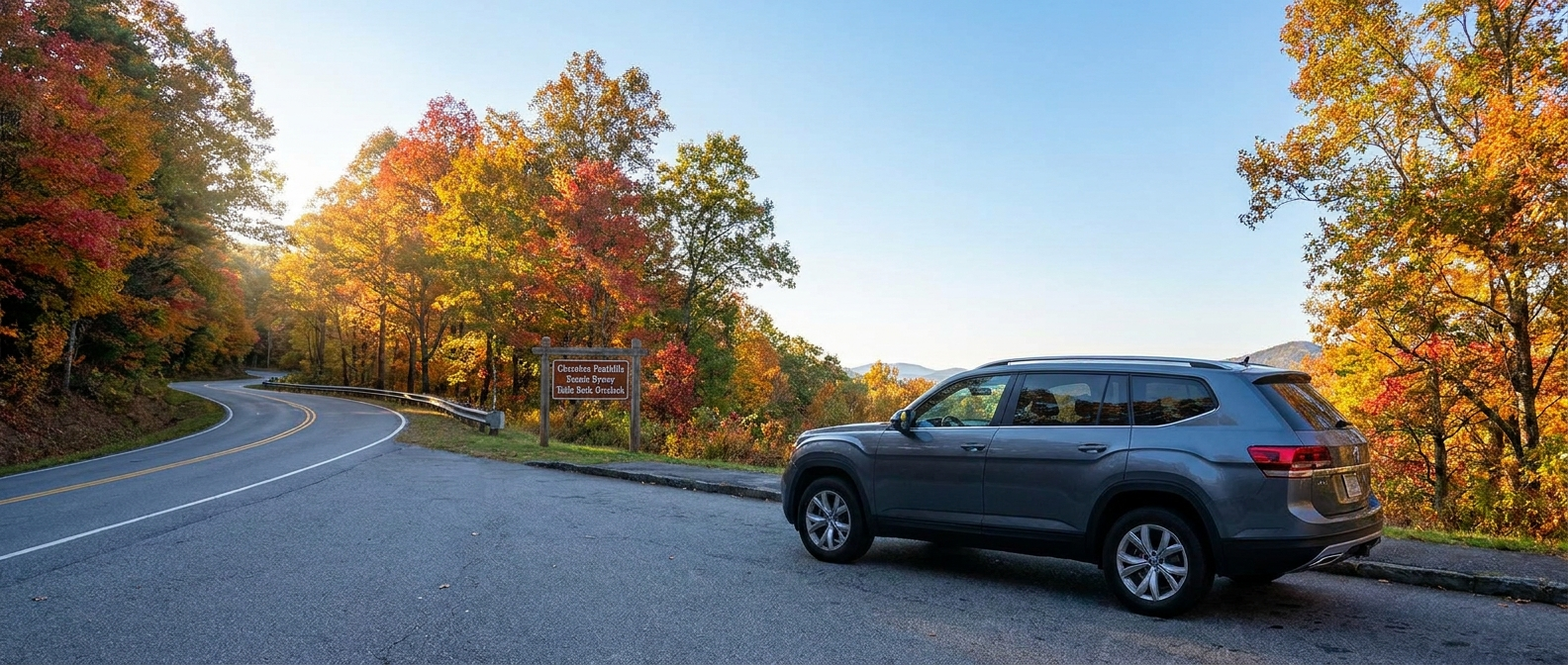
The Atlas launched in 2018, and it split opinions right away. You got one of the largest three-row cabins in its segment, a genuinely European driving feel, and all-wheel drive for the kind of family that runs out to browse used SUVs on a Saturday afternoon. The first generation was also rough. So the question isn't whether the Atlas is a good used buy. It's *which year?* And here in the Upstate, where families are loading up for weekends on Cherokee Foothills National Scenic Highway or pulling a lake boat toward Lake Hartwell, the wrong model year creates headaches that generic national guides don't account for.
Our service center team has watched plenty of these come through. The 2018 and 2019 are consistent trouble, and NHTSA's complaint database backs that up. Quietly underrated, the 2020 is the sleeper. Then there's the 2021, which surprises people, and not in a good way. By 2022 and 2023, things settle into something solid. Below, we'll walk each generation clearly.
The short version
- Sweet spot: 2022 or 2023. Most of the first-gen bugs are resolved, NHTSA complaint volume drops sharply, and you still find them at reasonable used values.
- Strong budget pick: 2020. Cleanest first-gen year by NHTSA complaint volume, with only about 27 documented complaints on record.
- Watch out: 2018, 2019, and especially 2021. The 2021 logged 464 NHTSA complaints and 17 recalls, which is the worst of the bunch.
- The 2024 refresh is a different animal: new 269 hp turbocharged 4-cylinder replaces both the old 2.0L and the VR6, plus a 12-inch touchscreen and IQ.DRIVE go standard across the board.
- Before any purchase: verify NHTSA recall completion on the VIN, inspect the rear coil springs (2018-2019), and on a 2021, confirm the wheel bearing bolts and occupant detection system were addressed.
Which Atlas Model Years Hit the Sweet Spot?
For most Upstate buyers, we'd point to the 2022 and 2023 first, and that's not just our opinion, since NHTSA complaint data puts the 2023 at roughly 114 documented complaints against 461 for the 2018 and 464 for the 2021. The 2022 sits at around 217, meaningfully better than the early-generation years. Call it a real gap.
Both years also benefit from the mid-generation refresh that arrived for the 2021 model year, bringing a restyled exterior, an improved interior with standard safety features that had been optional before, and better-sorted powertrain refinement. By 2022 and 2023, Volkswagen had sorted the worst of the first-generation gremlins.
A real drawback is worth naming up front. 4MOTION all-wheel drive is optional on the SE and SE with Technology trims, not standard. A front-wheel-drive Atlas handles fine on I-85, but the Blue Ridge grades on SC-11 are another story in January. So confirm the build has 4MOTION.
The 2023 draws our eye because its recall count (11) and complaint volume rank lowest of any first-generation year with enough real-world time to judge. One occupant detection sensor recall is worth verifying, though you'll find it in earlier years too.
| Model Year | Generation Stage | NHTSA Recalls | Documented NHTSA Complaints | Powertrain | Sweet Spot? |
|---|---|---|---|---|---|
| 2018 | First gen, launch | 16 | ~461 | 2.0T or 3.6L VR6 | No |
| 2019 | First gen | 11-12 | ~473 | 2.0T or 3.6L VR6 | No |
| 2020 | First gen | 3-4 | ~27 | 2.0T or 3.6L VR6 | Budget pick |
| 2021 | First gen, refresh | 17 | ~464 | 2.0T or 3.6L VR6 | No |
| 2022 | First gen, post-refresh | 14 | ~217 | 2.0T or 3.6L VR6 | Yes |
| 2023 | First gen, mature | 11 | ~114 | 2.0T or 3.6L VR6 | Yes (top pick) |
| 2024+ | Mid-cycle refresh | Early data | Limited | 2.0T only, 269 hp | Promising, less history |
*NHTSA complaint and recall figures per the NHTSA public complaints database.*
Which Years Should You Watch Out For?
The years to watch are the 2018, 2019, and especially the 2021, and a sharply priced example can still make sense, but only when every recall is confirmed as completed and a careful inspection backs up the history you're taking on. Start with the 2018, which launched with 16 NHTSA recalls before it was even two years old. Per NHTSA records, a 2018-2019 Atlas recall (18V904000) covered rear coil springs that could fracture prematurely. Another recall (20V057000) addressed airbag crash sensors that could delay or disable deployment. Neither is a minor item. Our Atlas landing page shows what a properly spec'd example looks like, but on a used one, the service history matters as much as the trim.
The 2019 improved on the 2018 in a few ways, yet it still piled up ~473 NHTSA complaints, the highest of any year in the lineup. A 2023 recall (23V671000) added one more action for the 2019 specifically, where the driver's side impact airbag could deploy improperly or detach in a crash. Volkswagen issued that action five years after the vehicle went on sale, which tells you something about how long these issues trail.
A 2019 also carries the Continental tire sidewall recall (21V142000). The recall covered tires that were over-cured during production.
The 2021 is the one that catches buyers off guard. It logged 17 NHTSA recalls and ~464 complaints, which matches the 2018 for worst NHTSA complaint volume in the lineup. The problem areas are specific, too. NHTSA recall 21V812000 covered front wheel bearing bolts that may have been incorrectly tightened. Recall 40Q6 addressed the steering knuckle on the same model year. And the passenger occupant detection system recall (per NHTSA) spanned 2018-2021 models and the 2020 Atlas Cross Sport. So you're looking at a lot of outstanding items on a 2021. If you're eyeing one, pull the VIN on NHTSA.gov and confirm every recall has a completed remedy before you go further.
Our service center can run a recall completion check and a pre-purchase inspection if you're bringing a private-party Atlas to us before signing.
The 2020 is the quiet standout of the first generation: roughly 27 NHTSA complaints on record, compared to 461 for the 2018, making it the cleanest first-gen option for buyers working with a tighter budget.
What to Inspect Before You Buy (Regardless of Year)
A model-year guide gets you to a smart shortlist, but it can't tell you whether the specific truck in front of you was cared for, so an inspection is what actually closes the deal or walks you away, and here's where our team focuses on any used Atlas.
Recall completion first. Go to NHTSA.gov, enter the VIN, and download the recall report. Every Atlas year from 2018 through 2023 carries at least three recalls, and the 2021 has seventeen. Unrepaired recalls can mean parts sat on backorder for months or longer. Don't skip it.
Rear coil springs (2018-2019). Per NHTSA recall 18V904000, the rear axle coil springs on certain 2018-2019 Atlas vehicles could fracture prematurely. Have a technician eyeball the springs even when the VIN shows the recall completed. You'll want to know what the springs looked like before the remedy.
Front wheel bearing bolts (2021). NHTSA recall 21V812000 covers certain 2021 Atlas vehicles where the front wheel bearing bolts may have been incorrectly tightened. On a vehicle running Upstate mountain roads, correctly torqued wheel bearings aren't optional. Ask for documentation that the fix got done.
Occupant detection system (2018-2021). The passenger airbag can misbehave when the detection system fails. Sit in the passenger seat during the test drive, and confirm the airbag readiness indicator behaves normally.
Infotainment on the 2021-2023. The capacitive-touch interface that replaced physical buttons in this generation is a known friction point with owners. Test every control while parked. Confirm the display responds consistently and that the software is up to date.
4MOTION engagement. If the vehicle has all-wheel drive, test it. Enable snow mode or find a low-grip surface if you can. The system's mechanically sound on well-maintained examples, and what fails is the sensors and solenoids that haven't been exercised.
Cooling system history. Cooling history matters more on the VR6-equipped years (2018-2023). Ask for maintenance records, and look for coolant changes at the manufacturer-recommended interval. Our Upstate summer heat cycles are rough on cooling systems that have been neglected.
Schedule a Pre-Purchase Inspection
Which Year Fits Which Upstate Buyer?
The right year really comes down to what you're asking the Atlas to do in this region, whether that's a daily I-85 commute, lake-weekend hauling, or winter mornings on elevated roads, and the profiles below aren't hypothetical, they're the ways families around here actually use these.
The 2022 or 2023 for most Upstate families. You're running I-85 between Greenville and Spartanburg regularly, loading up for lake weekends at Lake Hartwell, and you want the confidence of 4MOTION AWD when the Blue Ridge gets slick. The 2022-2023 range posts the lowest complaint volume of any first-gen Atlas with enough real-world miles to judge. We think that's worth a step up from the 2020, and worth more than the uncertainty you take on with a 2021.
The 2020 for the budget-conscious buyer. The 2020's complaint profile stands out. Roughly 27 NHTSA complaints across the whole model year puts it in a different category from every other first-gen Atlas. You'll still want to run the recall check and inspect the cooling history, but the 2020 is the sleeper of this lineup. It's the model year to target when the 2022-2023 examples are priced out of reach.
The 2024+ if your budget extends there. Does the extra spend make sense here? For a lot of Upstate buyers it can, because the 2024 mid-cycle refresh is a real change, with the VR6 gone and a single 269 hp turbocharged 2.0-liter four-cylinder paired to an eight-speed automatic in its place. Volkswagen lists the 12-inch touchscreen, Digital Cockpit Pro, IQ.DRIVE suite, three-zone climate control, wireless charging, and ventilated front seats as standard across the board starting in 2024. Less powertrain complexity, more standard equipment. The 2024 complaint data is still accumulating, so you're buying on early indicators, though the foundation is cleaner than any first-gen year.
Skip the 2018, 2019, and 2021 unless the price is exceptional and all recalls are documented as completed. Even then, you're buying one specific vehicle with one specific history, rather than the model year as a category. Get a full inspection. We mean that plainly, and that's advice rather than a sales pitch. Our financing team can work alongside your used-vehicle search so you understand what range of years makes sense for your situation.
At Steve White Volkswagen on Duvall Drive, we see used Atlases come through the service center regularly, and the patterns in the NHTSA data line up with what our technicians observe. Cleaner histories tend to show up on the 2020, 2022, and 2023. The 2018, 2019, and 2021 roll in with more open items. None of that is a coincidence.
If you've found a specific used Atlas and want our team to look at it before you commit, bring it in and we'll give you a straight read on what we find.
Frequently Asked Questions
Does the Volkswagen Atlas have a lot of recalls?
Yes, particularly in the first generation. Per NHTSA data, the 2018 Atlas alone has 16 recalls, the 2021 has 17, and the 2019 has 11 to 12. The 2023 improved to 11 recalls with a dramatically lower complaint volume. Always verify recall completion on the specific VIN at NHTSA.gov before purchasing any used Atlas from the 2018 through 2023 range.
Is the VR6 or the turbocharged 4-cylinder better in a used Atlas?
Both engines served in the first generation (2018-2023). The 3.6-liter VR6 is a smooth, well-proven engine, but it came with more complexity and a known sensitivity to cooling system maintenance. The turbocharged 2.0-liter four-cylinder is lighter on maintenance demands in general use. For 2024 onward, the VR6 was discontinued entirely: Volkswagen moved to a single 269-horsepower turbocharged 2.0-liter paired to an eight-speed automatic. If you're buying a first-gen Atlas with the VR6, verify coolant change history before you commit.
Should I get 4MOTION AWD on a used Atlas in Upstate South Carolina?
For most Upstate buyers, yes. The Cherokee Foothills Scenic Highway and the grades around the Blue Ridge Escarpment are manageable year-round, but winter mornings on elevated roads behave differently from I-85 in July. The 4MOTION system is optional on the SE and SE with Technology trims; confirm the build sheet before you buy. The SEL and SEL Premium trims came standard with 4MOTION across all first-generation years.
Categories:
Social