
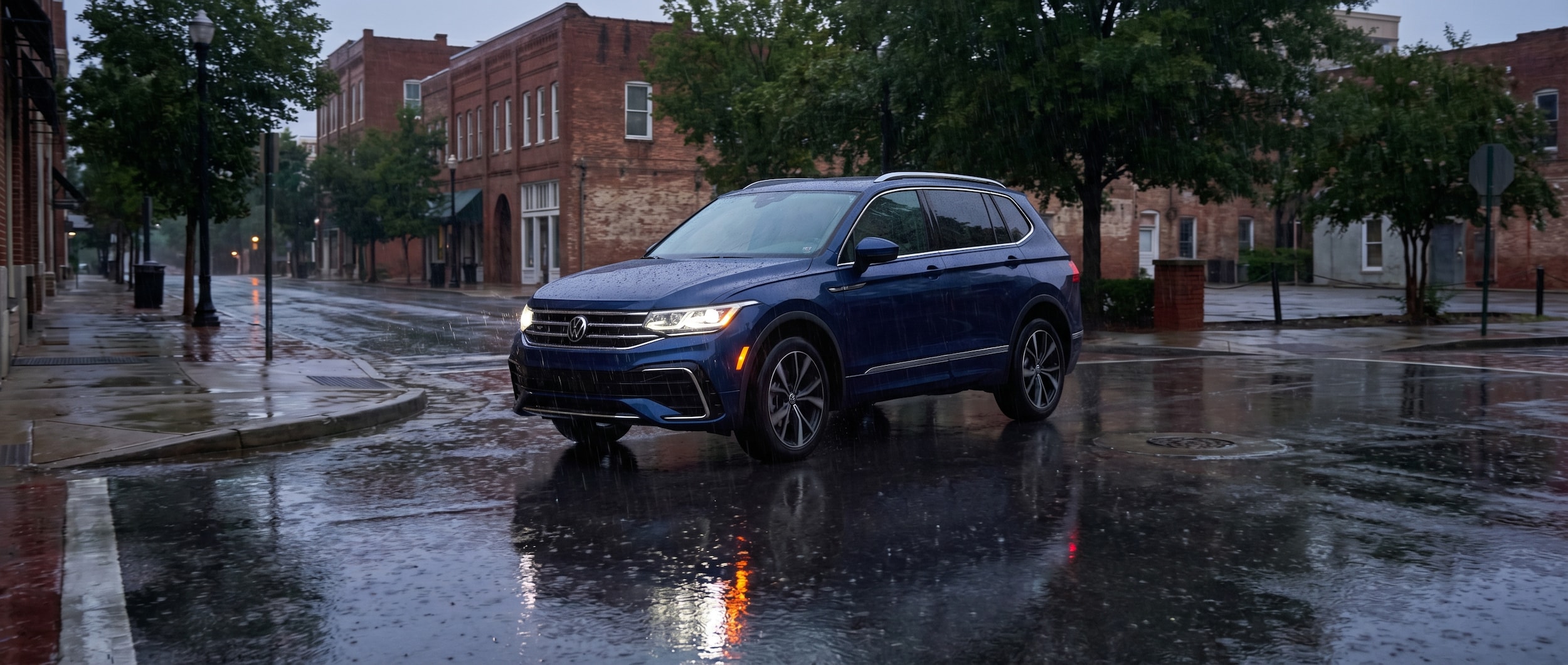
April storms can reduce your Volkswagen's braking efficiency by up to 30% - a critical safety factor every driver in Greenville, SC needs to understand. With our area's frequent spring downpours creating hazardous conditions on roads from Woodruff Road to Interstate 85, knowing how to inspect your brakes after heavy rain becomes essential for protecting your family and maintaining your vehicle's performance.
Why Rain Impacts Your Volkswagen's Braking System
Water acts like a lubricant between your brake pads and rotors, temporarily reducing friction by nearly one-third until heat from repeated braking evaporates the moisture. This phenomenon affects every vehicle, but modern Volkswagen models like the Tiguan™ and Atlas™ include advanced features designed to minimize this impact.
During April's frequent thunderstorms, brake components face multiple challenges:
- Surface rust forms on rotors within hours of exposure to moisture
- Brake fluid can absorb water over time, lowering its boiling point
- Debris washes onto brake components from road spray
- Temperature fluctuations cause metal parts to expand and contract
The hilly terrain around Paris Mountain and Cleveland Park amplifies these effects, as frequent braking on wet downhill slopes generates more heat and moisture cycling than flat-road driving.
Did you know? Your Volkswagen's brake rotors can develop a thin layer of rust in as little as 12 hours after driving through standing water, which is why that grinding sound on your first morning stop is completely normal.
Essential Post-Storm Brake Inspection Steps
Your brake system reveals its condition through several clear indicators that any driver can check without special tools or mechanical expertise.
Visual Inspection Checklist- Check brake fluid level through the transparent reservoir
- Look for fluid color (should be clear to light amber, not dark)
- Inspect visible rotor surfaces for excessive rust or scoring
- Examine brake lines for moisture or corrosion
- ✓ Verify no warning lights on dashboard
- ✓ Ensure parking brake releases completely
Start your inspection in a safe location like the Falls Park parking area, where you have room to perform low-speed brake tests away from traffic.
The most telling sign comes from your brake pedal feel. A properly functioning system maintains consistent pedal pressure whether dry or wet. If your pedal travels more than halfway to the floor or feels spongy after storms, moisture has likely entered the brake fluid.
Step 1: The Parking Lot TestFind an empty section of parking lot, perhaps at Haywood Mall during off-hours, and perform these simple checks at 5-10 mph.
Step 2: Listen for Warning SoundsApply brakes gently and note any squealing, grinding, or scraping that wasn't present before the storm.
Step 3: Feel for VibrationsPulsating through the brake pedal indicates warped rotors or uneven pad wear, often accelerated by repeated wet/dry cycles.
Testing Your Brakes Safely After Heavy Rain
| Test Type | What to Check | Warning Signs | Recommended Action |
|---|---|---|---|
| Cold Morning Start | First brake application | Grinding or scraping | Normal - light rust removal |
| Low Speed (5-10 mph) | Pedal feel and response | Spongy or soft pedal | Schedule inspection |
| Medium Speed (25-30 mph) | Stopping distance | Longer than usual | Professional evaluation needed |
| Steering Wheel Check | Vehicle tracking | Pulling left or right | Immediate service required |
| Emergency Stop Test | ABS engagement | No ABS activation in wet conditions | System check needed |
Perform these tests progressively, starting with the simplest and safest. The Swamp Rabbit Trail parking areas provide excellent locations for initial low-speed checks before venturing onto busier roads.
Pro tip: After driving through deep puddles on Laurens Road or Pleasantburg Drive, pump your brakes lightly several times to help dry the components and restore normal friction.
Your Jetta™ or Taos™ includes electronic stability systems that work with the ABS to maintain control, but these systems function best when brake components operate at peak efficiency. Regular post-storm checks ensure these safety features perform as designed when you need them most.
VW-Specific Brake Features and Wet Weather Performance
Volkswagen engineers design brake systems specifically for challenging weather conditions, incorporating several technologies that Greenville drivers benefit from during our unpredictable spring storms.
The Auto Hold feature, standard on most current Volkswagen models, prevents rollback on wet inclines like those approaching Caesars Head State Park. This system maintains brake pressure even after you release the pedal, reducing wear during stop-and-go traffic in rainy conditions.
Advanced Volkswagen Brake Technologies- Electronic Brake-pressure Distribution (EBD) adjusts front-to-rear brake balance
- Rain-sensing wipers trigger brake drying cycles
- Brake disc wiping removes water film during windshield wiper use
- Hill Hold Assist prevents rollback on grades above 5%
- Electronic Differential Lock (EDL) applies brake pressure to slipping wheels
The ID. Buzz™ introduces regenerative braking that actually performs more consistently in wet conditions than traditional friction brakes, as the electric motor provides resistance without relying on pad-to-rotor contact.
Performance models like the Golf GTI™ and Golf R™ feature larger ventilated rotors that shed water more quickly, though they still require the same post-storm attention as other models in the lineup.
Maintenance Schedule for Rainy Season Brake Care
| Service Interval | Inspection Focus | Especially Important For |
|---|---|---|
| After each major storm | Visual check, pedal feel | All models |
| Monthly (April-June) | Brake fluid moisture content | Vehicles over 3 years old |
| Every oil change | Pad thickness measurement | City drivers, hilly routes |
| Annually | Complete brake system flush | High-mileage vehicles |
| Every 2 years | Brake fluid replacement | All Volkswagen models |
Living near Lake Robinson or Lake Cunningham means additional exposure to humidity that accelerates brake component wear. Vehicles regularly parked outdoors in these areas benefit from more frequent inspections.
The service technicians at many locations understand our local weather patterns and can identify region-specific wear patterns that drivers from other areas might not recognize. When you schedule service, mention any specific concerns about wet weather performance.
Signs You Need Professional Brake Service- Brake warning light stays illuminated
- Pedal requires pumping to build pressure
- Grinding continues after initial morning rust removal
- Steering wheel shakes during braking
- Unusual odors after normal driving
- Brake fluid appears dark or contaminated
Regular maintenance prevents small issues from becoming safety hazards, especially critical during Greenville's wettest months when stopping distances naturally increase.
Common Questions About VW Brakes and Greenville, SC Weather
How long do VW brake pads typically last in Greenville's climate?
Volkswagen brake pads typically last 25,000-70,000 miles in Greenville, with the wide range depending on driving habits and routes. Frequent trips on mountainous roads toward Travelers Rest or stop-and-go traffic on Woodruff Road accelerates wear compared to highway driving, while our humid climate can slightly reduce lifespan compared to drier regions.
Should I use my parking brake during storms in Greenville, SC?
Avoid using your parking brake during freezing rain or when parking in standing water, as the cables can freeze or corrode in Greenville's variable April weather. For automatic transmission vehicles, placing the car in park provides sufficient security on level ground, though manual transmission owners should use wheel chocks on inclines during severe weather.
What's the grinding noise when I first brake after rain?
The grinding noise during your first brake application after rain is surface rust being cleared from your rotors - completely normal and harmless. This light rust forms within hours on vehicles parked during Greenville's humid nights and disappears after a few brake applications, though persistent grinding beyond the first few stops warrants professional inspection.
How often should I change brake fluid in my Volkswagen?
Change your Volkswagen's brake fluid every 2 years regardless of mileage, as it absorbs moisture from Greenville's humid air even when sitting unused. This interval becomes especially critical for vehicles frequently driven on Interstate 385 or Highway 25, where elevation changes and weather exposure accelerate fluid contamination.
Do ceramic brake pads perform better in wet conditions?
Ceramic brake pads offer more consistent wet-weather performance than semi-metallic alternatives, producing less dust and maintaining effectiveness in Greenville's rainy conditions. While the initial bite might feel slightly less aggressive than metallic pads, ceramics provide quieter operation and longer life for most Volkswagen models in our climate.
Where can I safely test my brakes after storms in Greenville, SC?
Test your brakes safely in empty parking lots at Verdae Shopping Center early mornings or the Millennium Campus overflow lots on weekends. These locations offer ample space away from traffic to perform low-speed brake checks, with easy access to main roads once you've confirmed proper operation.
Protecting Your Investment Through Proper Brake Care
Your Volkswagen's brake system represents one of its most critical safety features, especially during Greenville's unpredictable April weather. Regular inspections after storms, combined with professional maintenance when needed, ensure your vehicle stops reliably whether navigating downtown rainfall or sudden downpours on Interstate 85.
Taking five minutes to check your brakes after heavy rain could prevent accidents and expensive repairs down the road. The combination of our local weather patterns and varied terrain creates unique challenges that proper maintenance easily overcomes.
When you need professional brake inspection or service, the experienced technicians at Steve White Volkswagen understand exactly how our local conditions affect your vehicle's braking system. Their expertise with Volkswagen's advanced brake technologies ensures your car maintains peak performance through every season.
Categories:
Social