
Your brake fluid absorbs moisture from the air at a rate of 2-3% per year, and in Greenville, SC's humid climate, this process accelerates - potentially reducing your Volkswagen's braking effectiveness by up to 25%. This invisible deterioration happens whether you drive your Tiguan™ daily on I-85 or your Atlas sits parked near Falls Park most weekends. Understanding brake fluid maintenance protects both your safety and your investment, especially as we head into the hot, humid Upstate summer that puts extra stress on your vehicle's braking system.
How Greenville's Climate Affects Your VW's Brake Fluid
Brake fluid is hygroscopic, meaning it naturally attracts and absorbs water from the atmosphere - and the Upstate's average 70% humidity creates the perfect conditions for rapid moisture absorption. When brake fluid in your Jetta or Taos reaches just 3% water content, its boiling point drops from around 450°F to below 300°F. During those steep descents on Highway 11 near Table Rock State Park or stop-and-go traffic on Woodruff Road, this compromised fluid can actually boil, creating vapor bubbles that make your brake pedal feel spongy or sink to the floor.
The combination of our hot summers and frequent afternoon thunderstorms creates temperature swings that accelerate brake fluid degradation. Each time you drive from the cooler elevations near Paris Mountain down into downtown Greenville's heat, your brake system experiences thermal cycling that draws more moisture into the fluid.
Did you know? Brake fluid can darken from clear amber to dark brown without losing its effectiveness - color isn't a reliable indicator. Only a moisture content test can determine if your fluid needs replacing.
Your Volkswagen's advanced braking systems, whether it's the performance brakes on a Golf GTI or the heavy-duty setup on an Atlas Cross Sport, require brake fluid that maintains consistent performance. Contaminated fluid doesn't just affect stopping power - it can corrode expensive ABS components and brake lines from the inside out.
Signs Your VW Needs Brake Fluid Service
Most Greenville drivers won't notice brake fluid deterioration until it's already affecting performance - but watching for these warning signs can prevent costly repairs and dangerous situations. A soft or spongy brake pedal that requires more pressure than usual often indicates moisture contamination, especially if it's been over two years since your last brake fluid service. You might notice this change gradually on your daily commute from Simpsonville on I-385, where consistent highway speeds mask declining brake response.
Physical symptoms to watch for:
- Brake pedal travels closer to the floor than normal
- Increased stopping distances, particularly noticeable at Haywood Mall's busy intersections
- ABS warning light illuminates on your dashboard
- Grinding or unusual noises when braking
- Brake pedal vibration beyond normal ABS activation
- Visible fluid leaks near any wheel
| Warning Sign | What It Means | Urgency Level |
|---|---|---|
| Spongy pedal feel | High moisture content in fluid | Schedule service soon |
| ABS light on | Potential fluid or sensor issue | Immediate attention needed |
| Dark or cloudy fluid | Contamination present | Test moisture content |
| Low fluid level | Possible leak in system | Check immediately |
| Pedal goes to floor | Severe fluid problem or leak | Do not drive |
Your Tiguan or Jetta GLI relies on precise hydraulic pressure to activate the brakes. Even small amounts of moisture create compressible vapor that destroys this precision, making emergency stops less predictable.
The Real Cost of Skipping Brake Fluid Maintenance
Postponing a $150 brake fluid flush might seem like smart budgeting, but moisture-contaminated fluid causes exponentially more expensive damage throughout your Volkswagen's brake system. When water content reaches 4-5%, internal corrosion begins attacking brake lines, calipers, and your ABS pump - components that cost thousands to replace on modern VW models. A single corroded brake line on your ID. Buzz can run $300-500 to replace, while ABS module failure often exceeds $2,000.
Beyond repair costs, contaminated brake fluid creates safety risks that numbers can't capture. Brake fade during mountain driving near Caesars Head State Park or complete brake failure in Greenville's notorious rush hour traffic puts you and your passengers at serious risk.
Pro tip: Volkswagen recommends brake fluid replacement every 2 years regardless of mileage. Upstate humidity means you shouldn't stretch this interval.
Think of brake fluid service like health insurance for your entire brake system. Regular maintenance protects:
- Master cylinder ($400-700 replacement)
- Brake calipers ($300-600 per wheel)
- ABS hydraulic unit ($1,500-2,500)
- Brake lines ($200-400 per line)
- Electronic stability control components ($800-1,500)
Check out our pre-owned inventory to see how well-maintained Volkswagens with documented brake fluid service hold their value better than those with neglected maintenance.
Volkswagen's Brake Fluid Service Intervals
Volkswagen® specifies brake fluid replacement every 2 years for all models, from the compact Golf GTI to the three-row Atlas - a schedule based on extensive testing but not accounting for regional climate factors. The Upstate's combination of high humidity and temperature extremes means smart owners consider annual moisture testing between required services. Your owner's manual lists this as "Brake Fluid Service" under the maintenance schedule, typically combined with other 20,000 or 40,000-mile services.
Different driving patterns affect brake fluid life:
- Daily commuters on I-85: Higher brake temperatures from frequent stopping accelerate moisture absorption
- Weekend drivers: Longer sitting periods allow more atmospheric moisture intrusion
- Mountain enthusiasts: Frequent elevation changes and extended downhill braking create extreme thermal cycles
- City drivers in downtown Greenville: Stop-and-go traffic generates consistent heat without cooling periods
| Driving Style | Moisture Risk | Suggested Check Interval |
|---|---|---|
| Highway commuting | Moderate | Every 18 months |
| City driving | High | Every 12 months |
| Mountain/towing | Very high | Every 12 months |
| Occasional use | Moderate-High | Every 12-18 months |
Your Taos or Tiguan's brake fluid reservoir sits under the hood where summer temperatures can exceed 140°F, accelerating the moisture absorption process. Regular testing between services ensures you catch problems before they affect braking performance.
What Happens During Professional Brake Fluid Service
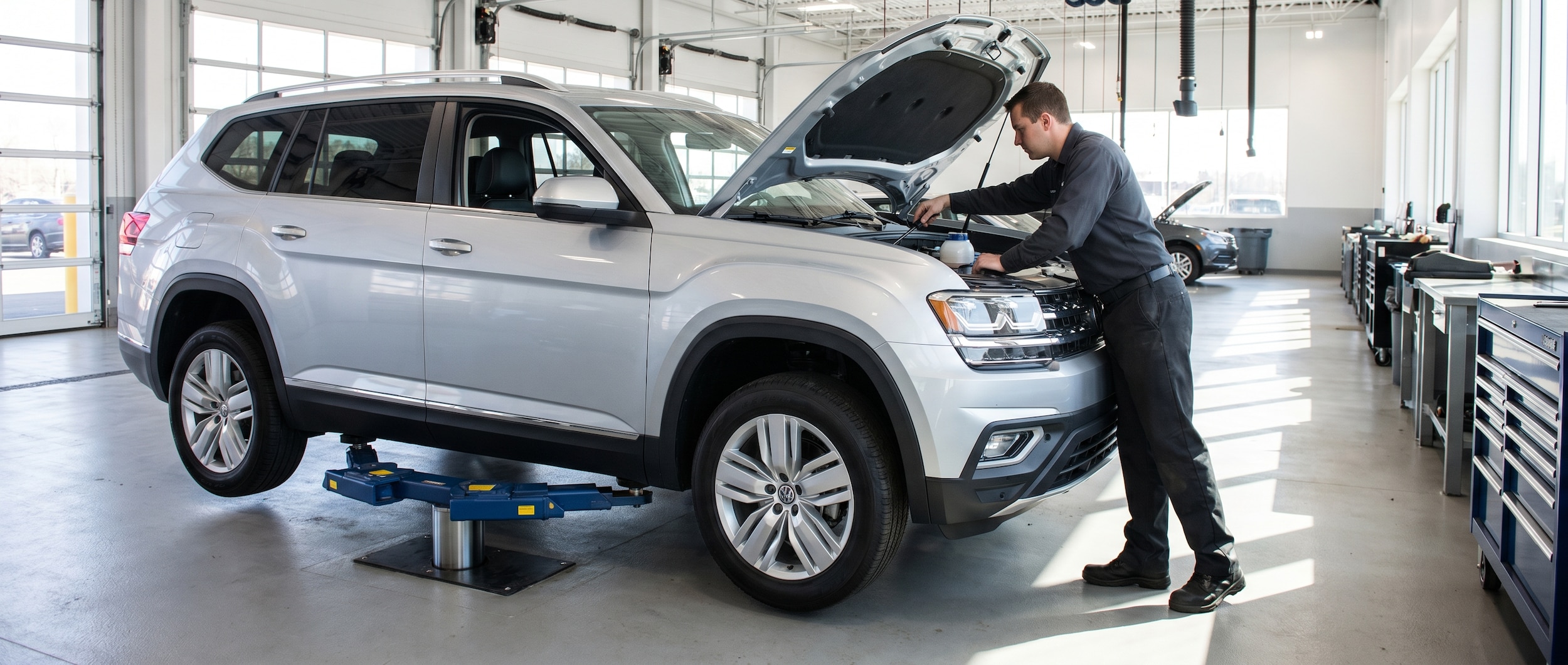
Professional brake fluid service at a certified Volkswagen facility goes far beyond simply topping off the reservoir - it's a complete system flush that removes all contaminated fluid and trapped air. The process starts with testing your current fluid's moisture content using specialized electronic testers that measure water percentage down to 0.1% accuracy. Your technician then connects a pressure bleeder to push new DOT 4 fluid (Volkswagen's specification) through every line while extracting old fluid from each wheel's bleeder valve.
The complete service process includes:
Step 1: System Inspection
Visual check of all brake components, lines, and connections for leaks or damage
Step 2: Moisture Testing
Electronic measurement of current fluid contamination level
Step 3: Pressure Bleeding
Sequential flushing starting with the wheel farthest from master cylinder
Step 4: ABS Cycling
Activation of ABS pump to flush fluid from internal passages
Step 5: Final Testing
Brake pedal feel assessment and test drive
Modern Volkswagens like the ID. Buzz and Atlas Cross Sport have complex ABS systems with internal valves and passages that trap old fluid. Professional equipment cycles these components during service, something DIY methods can't accomplish. The entire process typically takes 45-60 minutes and ensures every drop of moisture-contaminated fluid exits your brake system. Time to schedule service if you're approaching the two-year mark or notice any symptoms we've discussed.
Protecting Your VW's Brakes Between Services
Smart maintenance between professional brake fluid services extends the life of your entire brake system and maintains consistent stopping power through Greenville's varied weather conditions. Start by checking your brake fluid level monthly - it takes just seconds with your Volkswagen parked on level ground near Fluor Field or your driveway. The translucent reservoir under your hood shows minimum and maximum marks; fluid should stay between these lines without regular topping off.
Environmental factors that accelerate brake fluid contamination in the Upstate:
- Parking outdoors during summer thunderstorms
- Temperature swings between Cleveland and Greenville elevations
- High humidity from proximity to Lake Hartwell and Lake Keowee
- Winter road salt tracked up from lower elevations
- Construction dust from Greenville's growing infrastructure
Pro tip: If you must add brake fluid between services, use only DOT 4 that meets VW specification 501.14. Never mix DOT 3 or DOT 5 fluids with your Volkswagen's DOT 4 system.
Simple protective measures make a real difference. After driving through heavy rain or mountain fog near Table Rock, allow extra following distance for the next few stops while brake components dry. When possible, use engine braking on long descents instead of riding the brakes continuously. If your daily route includes multiple elevation changes between Travelers Rest and downtown, consider having moisture content tested annually rather than waiting the full two years. These small adjustments to your driving habits, combined with attention to your vehicle's needs, keep your brake system performing like new between professional services.
Common Questions About VW Brake Fluid Service in Greenville, SC
How often should I change the brake fluid in my Volkswagen in Greenville's climate?
Volkswagen recommends brake fluid replacement every 2 years regardless of mileage, but Greenville's humid subtropical climate may warrant annual moisture testing. The Upstate's average 70% humidity and temperature variations accelerate moisture absorption. If you frequently drive mountain roads near Paris Mountain or tow with your Atlas, consider annual service for optimal safety.
What type of brake fluid does my VW require?
All modern Volkswagen models require DOT 4 brake fluid that meets VW specification 501.14 for proper system protection. This includes the Golf GTI, Jetta, Tiguan, Taos, Atlas, and ID. Buzz sold in Greenville. Never substitute DOT 3 or DOT 5 as they can damage seals and provide inadequate boiling point protection for your VW's advanced brake systems.
Can humidity near Lake Hartwell affect my VW's brake fluid faster?
Yes, proximity to Lake Hartwell, Lake Keowee, and other Upstate water bodies creates localized humidity levels above 80% that accelerate brake fluid moisture absorption. Vehicles stored outdoors near these areas may need brake fluid service more frequently than the standard 2-year interval. Regular moisture testing helps determine the ideal service schedule for your specific location.
How much does brake fluid service cost for a Tiguan in Greenville?
Professional brake fluid service typically ranges from $120-180 for most Volkswagen models including the Tiguan, depending on current service specials. This includes complete system flush, new DOT 4 fluid, moisture testing, and brake inspection. Compared to potential repair costs from neglected maintenance, it's valuable protection for your VW's brake system.
Where can I get my Jetta's brake fluid tested in Greenville, SC?
Steve White Volkswagen offers complimentary brake fluid moisture testing during any service visit or multi-point inspection in Greenville. Our certified technicians use electronic testers to measure exact water content percentage. We'll provide results and recommendations based on Volkswagen standards and local driving conditions specific to the Upstate region.
Does the ID. Buzz require different brake fluid service than other VW models?
The ID. Buzz uses the same DOT 4 brake fluid specification as other Volkswagen models but features regenerative braking that reduces traditional brake system wear. However, brake fluid still requires replacement every 2 years due to moisture absorption. The ID. Buzz's advanced electronic systems make proper brake fluid maintenance even more critical for protecting expensive components.
Keep Your Volkswagen Stopping Safely in the Upstate
Regular brake fluid maintenance might seem like a minor service detail, but it's your primary defense against brake failure and expensive repairs in Greenville's challenging climate. Whether you're navigating daily traffic on Wade Hampton Boulevard or enjoying weekend drives through the Blue Ridge foothills, your Volkswagen's braking system deserves the protection that fresh, moisture-free brake fluid provides. The small investment in biennial service pays dividends through maintained stopping power, protected components, and peace of mind every time you press the brake pedal. The certified service team at Steve White Volkswagen understands how our local weather impacts your vehicle and can help establish the ideal maintenance schedule for your specific driving patterns.
Categories:
Social