
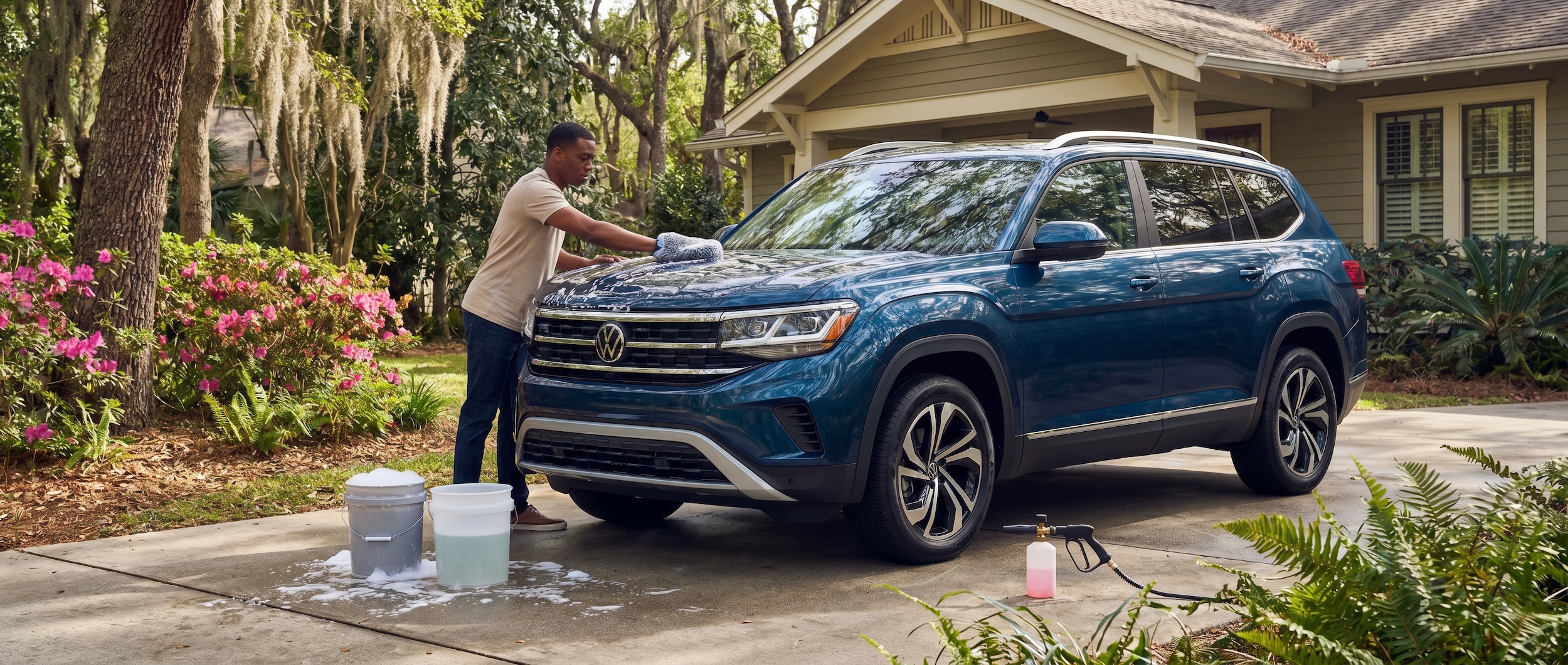
Microscopic swirl marks can reduce your Volkswagen resale value by up to $2,000 - but 90% of them happen during improper washing, not from daily driving. For Greenville, SC drivers dealing with pollen seasons, red clay dust, and humid conditions that accelerate contaminant buildup, knowing the right car wash techniques protects both your paint and your investment. This guide reveals professional detailing secrets, reviews local wash options from Cherrydale to Travelers Rest, and explains why your Tiguan factory clear coat needs different care than you might expect.
Understanding Your Volkswagen's Paint Technology
Modern Volkswagen paint consists of four distinct layers: e-coat primer, base primer, color coat, and a specialized clear coat that's 40% thicker than most competitors. This multi-layer system, developed in Volkswagen's Wolfsburg laboratories, creates exceptional durability but requires specific care techniques. The clear coat contains ceramic particles that enhance gloss and UV protection, making it particularly sensitive to improper washing methods.
Your Atlas or Taos rolls off the production line with paint that can maintain showroom shine for over a decade - if you avoid the common washing mistakes that create permanent damage. The factory clear coat measures just 1.5-2.0 mils thick (about half the width of a human hair), and each improper wash can remove microscopic amounts of this protective layer.
Did you know? Volkswagen tests their paint systems by exposing panels to 5,000 hours of UV light - equivalent to parking outside in Greenville for 15 years straight.
The unique chemistry of VW's water-based paint system actually makes it more environmentally friendly but also more susceptible to certain contaminants. Tree sap from the abundant oaks around Falls Park, industrial fallout near I-85, and acidic bird droppings all bond more aggressively to water-based paints than traditional solvent-based systems.
The Science Behind Swirl Marks and Paint Damage
Swirl marks form when contaminated wash mitts drag dirt particles across your paint surface, creating thousands of tiny scratches that reflect light in circular patterns. Under direct sunlight at places like Fluor Field or while parked at Haywood Mall, these scratches become highly visible as spider web patterns that destroy your paint's mirror-like finish. Each dirt particle acts like sandpaper, and traditional terry cloth towels or old t-shirts amplify this effect.
Temperature plays a crucial role in swirl formation - something Greenville drivers experience firsthand with our 90-degree summer days. Hot paint surfaces become softer and more susceptible to scratching, while cold winter mornings make the clear coat brittle and prone to micro-fracturing. The optimal washing temperature sits between 50-70°F, typically found during early morning hours before the South Carolina sun intensifies.
| Swirl Mark Causes | Damage Level | How to Identify | Prevention Method |
|---|---|---|---|
| Dirty wash mitt | High | Circular scratches visible in sunlight | Two-bucket method with grit guards |
| Automatic car washes | Medium-High | Uniform straight scratches | Touchless washes only |
| Improper drying | Medium | Random fine scratches | Blower drying or quality chamois |
| Contaminated towels | High | Deep circular patterns | Dedicated microfiber system |
| Hard water spots | Low-Medium | Etched circles after drying | Immediate drying, water softener |
Understanding contamination sources specific to the Upstate helps prevent damage before it starts. Pollen from our abundant pine trees contains acidic compounds that etch into clear coat when activated by morning dew, while construction dust from Greenville's growing downtown contains silica particles harder than your paint surface.
Professional Two-Bucket Washing Method for Greenville Drivers
The two-bucket method remains the gold standard for swirl-free washing, separating clean wash water from contaminated rinse water throughout the process. This technique, used by professional detailers from Wade Hampton Boulevard to Woodruff Road, prevents reintroducing dirt particles to your paint surface. Here's the complete system adapted for local conditions:
Essential Two-Bucket Setup:
- 5-gallon bucket with "WASH" label and grit guard
- 5-gallon bucket with "RINSE" label and grit guard
- pH-neutral car shampoo (2 oz per gallon)
- 3-4 high-quality microfiber wash mitts
- Dedicated wheel brushes and bucket
- Pressure washer or strong hose nozzle
Step 1: Pre-Rinse and Decontamination
Begin by parking in shade - the covered areas at Cleveland Park work perfectly during summer months. Rinse thoroughly from top to bottom, paying special attention to wheel wells where Greenville's red clay accumulates. This initial rinse removes 70% of loose contaminants before touching the paint.
Step 2: Wheels First Protocol
Always clean wheels before paint to prevent brake dust contamination. Use a separate bucket and brushes exclusively for wheels, as brake particles contain metallic compounds that create deep scratches. The ceramic brakes on Golf R models produce particularly abrasive dust requiring extra care.
Step 3: Systematic Panel Washing
Start with the cleanest panels (roof and glass) and work toward the dirtiest (rocker panels and rear bumper). After cleaning each panel, rinse your mitt in the RINSE bucket, rubbing against the grit guard to release trapped particles. Only then dip into the clean WASH bucket for fresh suds.
Pro tip: Change wash mitts every 2-3 panels on heavily soiled vehicles. Professional detailers near Haywood Mall typically use 4-6 mitts per vehicle.
Step 4: Safe Drying Technique
Never allow your Volkswagen to air dry - Greenville's hard water leaves mineral deposits that etch into paint. Use a dedicated drying towel or electric blower, working in straight lines rather than circles. Compressed air works exceptionally well for mirror housings and badge areas where water hides.
Greenville's Seasonal Car Care Challenges
Spring in the Upstate brings the infamous yellow pollen season, coating vehicles parked anywhere from Furman University to downtown Main Street. Pollen contains acidic proteins that activate when wet, creating a corrosive film that bonds to your clear coat within hours. During peak pollen season (March-May), washing frequency should increase to weekly, with quick rinses between full washes.
Spring Pollen Protocol:
- Rinse pollen immediately - never wipe dry pollen
- Use slightly cooler water to prevent pollen activation
- Add pollen-specific pre-treatment during heavy seasons
- Consider paint sealant application before pollen season
Summer's intense heat and humidity create different challenges. Parking under trees at Falls Park provides shade but exposes paint to sap and bird droppings - both require immediate attention. The combination of 95°F temperatures and 80% humidity accelerates chemical reactions between contaminants and clear coat.
Summer Protection Strategy:
- Wash during morning hours (before 10 AM)
- Never wash in direct sunlight
- Quick detail spray for bird dropping emergencies
- Monthly paint sealant inspection
Fall brings unique challenges with falling leaves that decompose on paint surfaces, releasing tannic acid. Popular hiking areas like Paris Mountain State Park and Caesars Head expose vehicles to tree debris that can stain paint within days. Leaf stains appear as dark outlines that penetrate clear coat if ignored.
Winter road treatments from SCDOT create the most aggressive contamination. The magnesium chloride used on I-385 and I-85 attracts moisture and accelerates corrosion. Unlike traditional road salt, these chemicals remain active even when dry, requiring thorough undercarriage cleaning.
| Season | Primary Threat | Washing Frequency | Special Considerations |
|---|---|---|---|
| Spring | Pollen, rain spots | Weekly | Pre-rinse essential, avoid wiping |
| Summer | Heat, sap, birds | Bi-weekly | Early morning only, seek shade |
| Fall | Leaves, acorns | Bi-weekly | Remove debris immediately |
| Winter | Road chemicals | Weekly | Undercarriage focus, include door jambs |
Comparing Local Car Wash Options: Touchless vs. Traditional
Greenville offers numerous car wash options, but not all protect your Volkswagen's specialized paint system equally. Touchless washes near Pelham Road use high-pressure water and chemicals instead of physical contact, eliminating swirl risks but potentially leaving contamination behind. Traditional friction washes provide better cleaning but risk paint damage from worn brushes and trapped debris.
Touchless Car Wash Advantages:
- Zero physical contact eliminates swirl potential
- Safe for new vehicles and fresh paint protection
- Consistent results regardless of equipment age
- Ideal for quick maintenance washes
Touchless Limitations:
- May not remove stubborn contamination
- Harsh chemicals can strip wax protection
- Limited effectiveness on wheel cleaning
- Higher water consumption
Traditional automatic washes with spinning brushes pose the highest risk for paint damage. Those cloth strips collect contamination from hundreds of vehicles daily - imagine washing your ID. Buzz with the same mitt used on 50 muddy trucks. Even "soft cloth" washes create micro-marring that accumulates over time.
Safe Local Washing Alternatives:
- Self-service bays with your own wash supplies
- Mobile detailing services to your location
- Touchless express washes for maintenance
- Hand wash at home following proper technique
For Tiguan and Atlas owners who frequently explore Greenville's outdoor destinations, consider joining an unlimited wash membership at reputable touchless facilities. This encourages frequent cleaning without paint damage risks, particularly important during pollen season and winter months.
Essential Products for Swirl-Free Washing
Investing in quality washing products costs less than fixing paint damage, with professional-grade supplies available at automotive retailers along Wade Hampton Boulevard and Woodruff Road. The right products make proper technique easier while providing superior protection for your Volkswagen's paint system.
Core Product Checklist:
- pH-neutral car shampoo (not dish soap)
- Microfiber wash mitts (minimum 3)
- Grit guards for buckets
- Dedicated wheel brushes
- Quality drying towels (waffle weave)
- Detail spray for quick touch-ups
- Paint sealant or ceramic coating
Did you know? Professional-grade microfiber mitts can hold up to 7 times their weight in water, lifting dirt away from paint surfaces instead of grinding it in.
Product quality directly impacts results. Premium microfiber contains split fibers that create millions of tiny pockets for trapping contamination. Cheap alternatives use larger, unsplit fibers that push dirt around rather than capturing it. Similarly, professional shampoos include lubricating polymers that encapsulate dirt particles, allowing safe removal.
Recommended Product Specifications:
- Microfiber: 300+ GSM, 80/20 blend minimum
- Shampoo: pH 6-8, high lubricity formula
- Drying towels: 500+ GSM waffle weave
- Grit guards: Radial design, fits 5-gallon buckets
Browse our new inventory to see how factory-fresh paint should look, then maintain that finish with proper products. The ceramic-infused clear coat on models like the Golf GTI responds exceptionally well to modern paint sealants that bond at the molecular level.
Common Mistakes That Create Permanent Damage
Even well-intentioned car care can cause irreversible paint damage when using incorrect techniques or products. Dish soap remains the most damaging common mistake - its degreasing agents strip protective wax and dry out plastic trim, accelerating UV damage during Greenville's sunny summers. One wash with dish soap removes months of paint protection.
Critical Mistakes to Avoid:
- Using household cleaners (dish soap, laundry detergent)
- Washing in circular motions
- Single bucket contaminating clean water
- Wiping bird droppings when dry
- Pressure washing too close to paint
- Using old bath towels for drying
The "quick wipe" at gas stations causes severe swirl damage. Those paper towels feel soft but contain wood fibers that scratch clear coat, while the blue window cleaner breaks down wax protection. Similarly, automatic car washes that recycle water concentrate dissolved minerals that spot and etch paint surfaces.
Permanent Damage Indicators:
- Spider web swirls visible in sunlight
- Hazy or dull clear coat sections
- Water beads unevenly across panels
- Visible scratches without magnification
- Paint feels rough after washing
Recovery from severe swirl damage requires professional paint correction - a process costing $500-1500 depending on severity. Prevention through proper washing costs under $50 in quality supplies and saves thousands in paint restoration or diminished resale value. Check our pre-owned inventory to see how paint condition affects vehicle values firsthand.
Protecting Your Volkswagen's Value Through Paint Care
Maintaining swirl-free paint directly impacts your vehicle's resale value, with clean paint adding $1,500-3,000 compared to neglected finishes. Professional appraisers examine paint under specialized lights that reveal every imperfection, and Carfax now includes paint condition assessments that follow your vehicle's history permanently.
Your Jetta GLI or Golf R represents significant investment in German engineering and performance. That sophisticated paint system protects more than aesthetics - it prevents corrosion, maintains structural integrity, and preserves the precision panel gaps that define Volkswagen build quality. Swirl marks might seem purely cosmetic, but they compromise the clear coat's ability to protect underlying layers.
Paint protection also enhances your ownership experience. Clean, swirl-free paint makes every drive more enjoyable, whether commuting through downtown Greenville or heading to Table Rock State Park for weekend adventures. There's genuine satisfaction in maintaining showroom condition years after purchase - and the confidence knowing you're preserving maximum value.
Modern paint protection options like ceramic coatings bond permanently to clear coat, creating a sacrificial layer that prevents swirls while making maintenance washing easier. These professional applications last 2-5 years with proper care, paying for themselves through reduced washing effort and preserved resale value.
Categories:
Social